

Learning how to find your personal style can feel confusing when fashion advice changes every week. One moment, everyone is building a minimalist wardrobe; the next, bold colours, oversized tailoring or vintage-inspired outfits are everywhere. Trying to follow every new direction often leaves a wardrobe full of clothes that look good individually but do not feel connected to the person wearing them.
The real answer to how to find your personal style is not hidden inside a trend report or a list of supposedly essential clothes. It begins with noticing what makes you feel comfortable, confident and recognisably yourself. Your preferred colours, favourite silhouettes, daily routine and practical needs all contribute to a style that can work beyond a single season.
If you are unsure how to find your personal style, you do not need to replace everything you own. Start with observation. The clothes already hanging in your wardrobe contain useful clues, including the pieces you wear constantly and the ones you repeatedly avoid.
Personal Style Is More Than an Aesthetic Label
Style labels can be helpful when gathering inspiration. Words such as classic, relaxed, romantic, minimal, sporty, streetwear and vintage give you a general direction. However, they should not become rules that prevent you from wearing something you genuinely like.
Most people are drawn to more than one fashion category. You may enjoy clean, tailored trousers but prefer wearing them with relaxed trainers. You might love feminine dresses while choosing practical coats and simple accessories. These combinations are not inconsistent. They are often what make a wardrobe feel personal.
Learning how to find your personal style means identifying the connection between your different preferences. That connection may come from a repeated colour palette, a certain level of comfort, similar proportions or the way you combine polished and casual pieces.
The SFM Compile fashion and personal-style blog approaches style as something flexible. Clothes should reflect the wearer’s real personality and routine rather than forcing them into a perfectly defined category.
Start With the Clothes You Already Wear
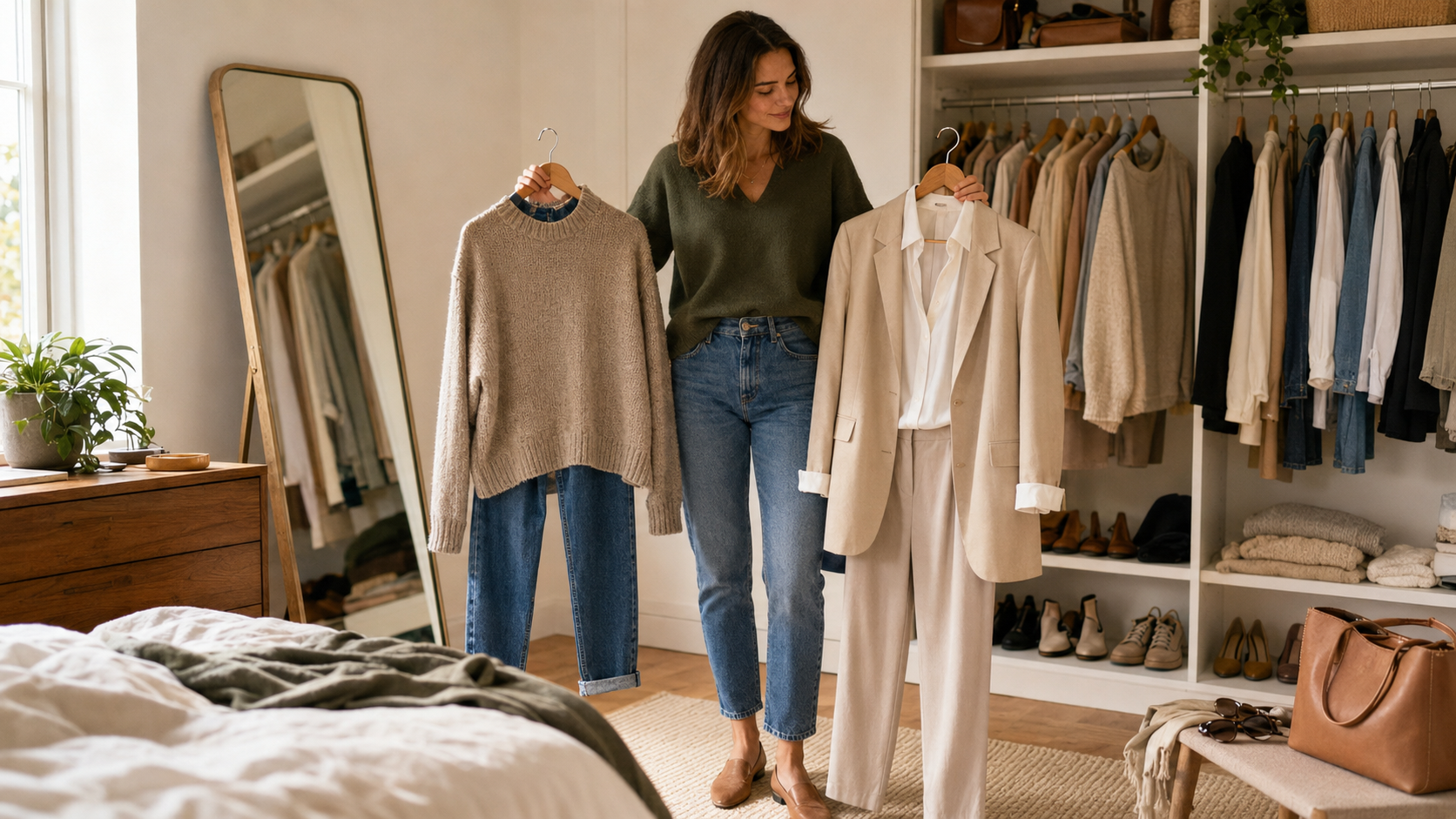
Before saving more outfit inspiration or going shopping, look closely at the clothes you already choose without hesitation. These pieces usually provide more honest information than anything sitting untouched in an online basket.
Choose five to ten items you wear regularly. They could include jeans, shirts, dresses, knitwear, jackets or shoes. Place them together and look for similarities.
Ask yourself:
- Are the fabrics soft, crisp, structured or flowing?
- Do you prefer fitted, straight, loose or oversized shapes?
- Which colours appear repeatedly?
- Are the clothes simple or highly detailed?
- Do you prefer high, mid or low waistlines?
- Which shoes make you feel most comfortable?
- How much time do these pieces require to style?
If you are wondering how to find your personal style, these repeated details are the best place to begin. A wardrobe full of relaxed cotton, denim and trainers suggests different priorities from one built around tailoring, fine knitwear and polished leather shoes.
Next, examine the clothes you rarely wear. Try to identify the actual reason each piece remains unused. It may be uncomfortable, difficult to coordinate, unsuitable for your routine or connected to a version of yourself that no longer feels relevant.
The clearest answer to how to find your personal style often appears in the contrast between the clothes you love wearing and the clothes you only wish you wore.
Dress for the Life You Actually Have
A beautiful wardrobe is not particularly helpful when it suits an imaginary lifestyle. Personal style needs to work during ordinary weeks, not only for holidays, celebrations or carefully planned photographs.
Think about where your time goes. Your week may include work, studying, commuting, childcare, social plans, exercise, errands and time at home. The proportions of your wardrobe should roughly reflect those activities.
The most practical answer to how to find your personal style is to begin with your most frequent situations. If you work from home but attend occasional meetings, you may need comfortable clothes that can become polished with one jacket or pair of shoes. If you walk or use public transport, supportive footwear and weather-friendly outerwear deserve greater attention.
Climate matters too. Heavy layering advice is not useful in a place that remains warm for most of the year. Similarly, a wardrobe built around light dresses and open shoes will feel incomplete during a long, wet winter.
Your tolerance for maintenance should also influence your choices. If you dislike ironing and rarely visit a dry cleaner, highly delicate garments will create unnecessary work. There is nothing stylish about owning clothes that make daily life more difficult.
Collect Inspiration With a Clear Purpose
Style inspiration can help you understand your taste, but saving hundreds of unrelated outfits often creates more confusion. Instead of collecting every attractive look, pay attention to outfits you could realistically imagine wearing.
Create a small digital folder or physical mood board. Save complete outfits, individual garments, colour combinations and styling details that consistently attract you. Avoid analysing the images at first. Once you have collected around 20 to 30 examples, review them together.
When learning how to find your personal style, look for repetition rather than individual statement pieces. You may notice that most of your saved outfits include:
- Relaxed trousers with fitted tops
- Long coats over simple layers
- Neutral outfits with one strong colour
- Vintage jewellery with modern clothing
- Denim combined with structured jackets
- Monochromatic looks using different textures
- Flat shoes with ankle-length trousers
These patterns are more useful than copying one outfit exactly. They allow you to translate the inspiration into clothes you already own.
Remember that styling, lighting, location and the person wearing the outfit can influence its appeal. Ask whether you like the actual clothing or simply the mood of the photograph. An outfit photographed in a beautiful setting may not suit your routine once those surroundings are removed.
Look for Three Descriptive Style Words
Choosing three style words can make outfit decisions easier without placing you inside one strict aesthetic. The words should describe how you want your clothes to look and feel.
For example:
- Relaxed, polished and modern
- Colourful, playful and comfortable
- Classic, understated and practical
- Romantic, soft and vintage-inspired
- Minimal, structured and confident
- Casual, creative and slightly rugged
People often ask how to find your personal style because they have many separate preferences but cannot see how those preferences belong together. Three descriptive words create a simple connection.
Use the words when evaluating an outfit or potential purchase. An item does not need to represent all three qualities equally, but it should support at least one or two of them.
Suppose your words are relaxed, polished and warm. A softly tailored brown blazer could suit your direction because it adds structure without feeling severe. A highly embellished evening jacket might be attractive, but it may not support the wardrobe you are trying to build.
Your words can change as your life and taste evolve. Their purpose is to provide direction, not a permanent identity.
Build a Colour Palette From Existing Favourites
Colour is one of the easiest ways to make separate garments feel connected. A personal palette does not mean limiting yourself to five approved shades. It simply gives your wardrobe enough consistency for pieces to work together.
Anyone exploring how to find your personal style should begin with colours they already wear happily. Identify two or three base colours that appear regularly in trousers, coats, knitwear, bags or shoes. These might include black, navy, cream, grey, camel, chocolate brown, olive or denim blue.
Then choose several accent colours. These can be soft, bright, deep or muted. Burgundy, forest green, rust, cobalt, blush pink and mustard can all add personality without making the wardrobe difficult to coordinate.
Notice whether you prefer warm or cool combinations and whether you enjoy high or low contrast. Someone who loves black and white may feel comfortable with sharp contrast, while another person may prefer softer combinations such as cream, camel and muted green.
The guide to choosing a wardrobe colour palette can help you build colour connections without turning them into restrictive rules.
Understand the Shapes You Enjoy Wearing
Silhouette describes the overall shape created by an outfit. Two wardrobes containing similar colours can feel completely different if one relies on fitted clothing and the other uses relaxed, oversized shapes.
A practical part of how to find your personal style is noticing which proportions make you feel most comfortable. You might prefer:
- High-rise trousers with tucked tops
- Long shirts over slim bottoms
- Wide-leg trousers with cropped jackets
- Loose dresses with structured shoes
- Straight jeans with relaxed knitwear
- Defined waists with fuller skirts
- Oversized outerwear over simple base layers
There is no universally correct silhouette. The goal is to recognise the shapes you enjoy so you can repeat them intentionally.
Fit remains important even when you like oversized clothing. A relaxed blazer may need the correct shoulder shape, while baggy jeans should still sit comfortably at the waist. The guide to how clothes should fit explains how to judge comfort, movement and proportion without becoming attached to the number on the label.
Try photographing several outfits from the front, side and back. A mirror provides immediate information, but photographs often reveal proportions more clearly. Use them as styling tools, not as a reason to criticise your body.
Choose a Few Signature Details
A signature does not have to be dramatic. It can be any detail you enjoy repeating enough that it becomes associated with your way of dressing.
Some people are recognised by bold glasses, silver jewellery or colourful trainers. Others regularly wear rolled sleeves, tucked shirts, scarves, structured bags or a particular style of jacket. Even a favourite colour can become a signature when it appears regularly.
When people ask how to find your personal style, they sometimes assume they need one unusual feature that nobody else wears. Personal style does not require that level of originality. Most clothes have been worn in countless ways before. What makes them personal is the combination, repetition and attitude of the wearer.
Accessories are particularly useful because they can change simple outfits without requiring a large wardrobe. A plain shirt and trousers may feel minimal with delicate jewellery, creative with a patterned scarf or sharper with a structured belt and bag.
The guide to using accessories to complete an outfit offers practical ways to work with colour, texture and scale.
Create Outfit Formulas You Can Repeat
An outfit formula is a dependable combination of clothing types. It makes daily dressing quicker while leaving room for variety.
Useful formulas might include:
- Straight jeans, a T-shirt, an open shirt and trainers
- Wide trousers, a fitted knit, a belt and loafers
- A midi dress, cardigan and ankle boots
- Tailored trousers, a casual top and structured jacket
- A skirt, tucked shirt and flat shoes
- Relaxed denim, a sweatshirt and long coat
If you are still unsure how to find your personal style, look at three outfits you recently enjoyed wearing. Write down their basic structure without mentioning colour or brand. You may discover that several successful looks use the same formula.
Repeating a formula does not mean wearing an identical outfit every day. You can change the fabrics, colours, layers and accessories while keeping the same comfortable proportions.
The collection of easy everyday outfit formulas provides adaptable ideas for casual days, work and social occasions.
Experiment Before Buying Something New
Shopping is often presented as the fastest way to improve personal style, but experimentation usually teaches you more. Before deciding that your wardrobe is missing something, try styling your existing clothes differently.
Tuck in a shirt you normally leave loose. Roll a trouser cuff to change the relationship with your shoes. Layer a fitted top under a dress. Add a belt to a relaxed jacket. Replace trainers with loafers or boots and notice how the mood changes.
Understanding how to find your personal style becomes easier when you separate the clothes themselves from the way they have always been worn. A neglected garment may not be wrong for you; it may simply need a different combination.
When you identify a genuine gap, write it down clearly. “Need better clothes” is too broad. “Need a lightweight jacket that works with wide trousers and can handle warm evenings” gives you a useful shopping target.
If you want to reduce clutter while creating more combinations, building a capsule wardrobe around your real routine can help you decide which pieces provide the greatest flexibility.
Avoid Common Personal-Style Mistakes
One common mistake is buying an entire outfit because it looked good on another person. Their body, climate, routine and comfort preferences may be completely different from yours.
Another mistake is keeping uncomfortable clothes because they represent the person you think you should become. Shoes that hurt, trousers that require constant adjustment and fabrics that irritate the skin will rarely support confident dressing.
Following too many trends at once can also make a wardrobe feel disconnected. Trends are most useful when they strengthen an existing preference. If you already enjoy relaxed tailoring, wide trousers may remain useful after the trend cycle changes. If you dislike volume, buying them because they are fashionable is unlikely to change that preference.
Knowing how to find your personal style also means accepting that not every beautiful garment belongs in your wardrobe. You can admire dramatic eveningwear, delicate vintage dresses or highly experimental streetwear without needing to own them.
Shop With Your Style Direction in Mind
Once you understand your colours, silhouettes and practical needs, shopping becomes more focused. You can judge an item by how it supports the wardrobe rather than how exciting it looks on its own.
Knowing how to find your personal style helps you ask better questions before buying:
- Can I wear this with at least three pieces I already own?
- Does it work with my usual shoes and outerwear?
- Does the fabric feel comfortable?
- Can I care for it realistically?
- Does it support my three style words?
- Am I buying the item or the fantasy surrounding it?
- Would I still want it if it were not currently trending?
Try clothes while moving. Sit, walk, bend and raise your arms. Look at the garment from different angles and check whether it needs constant adjustment. A piece that looks attractive for thirty seconds may not remain comfortable for an entire day.
Let Your Style Develop With You
Personal style is not a final destination. Bodies change, work changes, responsibilities shift and tastes mature. Clothes that once felt completely right may stop reflecting the person wearing them.
The answer to how to find your personal style may therefore change over time. A wardrobe can become more relaxed, colourful, tailored or practical without losing its identity. The connection often remains in smaller details: familiar colours, preferred proportions or the balance between comfort and polish.
Review your wardrobe occasionally, but avoid treating every review as a dramatic clear-out. Notice what you wear, what needs repairing and which gaps appear repeatedly. Give unfamiliar combinations a chance before deciding that an item no longer belongs.
How to Find Your Personal Style Without Forcing It
Give yourself permission to repeat outfits, change your mind and enjoy clothes without needing to define every choice. The strongest style usually grows through ordinary repetition rather than one complete transformation.
Ultimately, how to find your personal style comes down to paying attention. Notice which clothes help you move comfortably, which colours make you happy, which outfits suit your actual week and which details feel like you. Keep those qualities, experiment around them and allow the rest of your wardrobe to develop gradually.
Meta description: Learn how to find your personal style through your favourite clothes, daily routine, colours, silhouettes and outfit formulas without following rigid fashion rules.
