

SFM Compile: A Fashion and Personal Style Blog for Real-Life Dressing
Fashion advice is easy to find, but useful style advice is much rarer. One article tells people to clear out half their wardrobe. Another insists that everyone needs the same ten essentials. Social media moves even faster, replacing one “must-have” with another before most people have decided whether the first trend suited them. SFM Compile takes a calmer and more practical approach. It is a fashion and personal-style blog for readers who want to dress well without treating every morning like a styling challenge.
The blog looks at the details that make clothes work in ordinary life: fit, comfort, colour, fabric, proportion, versatility and personal taste. It is not built around the idea that good style belongs only to people with designer budgets or perfectly organised wardrobes. Instead, it helps readers understand what they already own, recognise what is missing and make more confident choices when they shop.
That practical direction gives the site a clear purpose. SFM Compile is not there to hand readers a strict fashion rulebook. It offers thoughtful guidance that can be adjusted to different bodies, routines, climates and budgets. A student building a first grown-up wardrobe may need something different from a professional refreshing work outfits. Someone who walks everywhere will judge shoes differently from someone who drives. Personal style becomes much easier when advice leaves room for those differences.
What Readers Can Find on SFM Compile
At its heart, SFM Compile covers fashion as it is actually worn. Readers can explore wardrobe planning, everyday outfits, seasonal dressing, denim, shoes, accessories, fabric quality, clothing care and the gradual process of developing personal style. The subjects connect naturally because one wardrobe decision usually affects several others.
A pair of trousers, for example, cannot be judged only by its colour. The rise affects the tops that work with it, the leg shape changes the most flattering shoe options, and the fabric determines whether it feels casual or polished. In the same way, a winter coat must do more than look attractive in a photograph. It has to fit over layers, work with the clothes already owned and make sense for the local weather.
The blog breaks these decisions into clear, manageable ideas. It explains why an outfit feels balanced, how a small alteration can improve a garment and when a fashionable item is likely to become an expensive mistake. Readers are not expected to memorise technical language. The writing stays approachable, with advice that can be used while getting dressed, browsing online or standing in a changing room.
For anyone starting from scratch, the guide to finding a personal style that feels natural is a useful first step. It encourages readers to notice the clothes they already enjoy instead of forcing themselves into an aesthetic chosen mainly because it looks popular online.
A More Human View of Personal Style
Personal style is often presented as something a person discovers in one dramatic moment. Realistically, it develops over time. People repeat certain colours, return to familiar shapes and slowly learn which fabrics feel good throughout a long day. They also make mistakes. A striking jacket may never leave the wardrobe because it does not suit daily life, while a simple shirt bought without much excitement may become a favourite.
SFM Compile treats those experiences as useful information. The aim is not to create a perfect wardrobe overnight. It is to help readers recognise patterns in what they wear. Perhaps they like clean tailoring but dislike stiff fabric. Maybe they enjoy colour in knitwear but prefer neutral trousers and shoes. Some people feel best in long, fluid lines; others like shorter jackets and a clearly defined waist.
These preferences matter more than a fashionable label. “Minimalist,” “classic,” “streetwear” and “romantic” can provide inspiration, but very few people fit entirely inside one category. A wardrobe can include relaxed denim, a sharply cut blazer, vintage jewellery and practical trainers without being confused. The connection comes from the person wearing those pieces and the way they combine them.
The blog also recognises that style changes. A new job, a move to another climate, a shift in body shape or a busier routine can make an old wardrobe feel unfamiliar. That does not mean a person has lost their sense of style. It simply means their clothing needs to catch up with their life.
Building a Wardrobe Around Everyday Needs
A useful wardrobe reflects how time is really spent. If most days are casual, casual clothes deserve more thought and a larger share of the budget. If work requires polished outfits, those clothes should be comfortable enough for a full day rather than saved for imaginary perfect occasions. Special-event pieces matter, but they should not crowd out the clothing needed every week.
This is one of the most practical ideas behind SFM Compile: buy for real life first. Before adding another garment, readers are encouraged to think about where it will be worn, what it will be worn with and whether its care requirements are realistic. A cream silk blouse may look beautiful, but it is not a useful everyday basic for someone who avoids dry cleaning and feels anxious about stains.
Wardrobe foundations are personal. For one reader, they might include straight-leg jeans, soft T-shirts, an overshirt, ankle boots and a weatherproof coat. Another person may rely on wide trousers, fine knits, midi dresses, loafers and a relaxed blazer. Neither list is more correct. A wardrobe essential earns that name through regular wear, not because it appears on a standard checklist.
Readers who want fewer clothes and more outfit options can explore how to build a capsule wardrobe around everyday routines. The goal is not to reduce a closet to a severe row of beige basics. It is to create enough compatibility that getting dressed feels easier.
Why Fit Changes Everything
An ordinary garment that fits well often looks better than an expensive piece that sits awkwardly. Fit affects comfort, movement and the overall line of an outfit, yet it is one of the easiest things to overlook when a colour or trend feels exciting.
SFM Compile talks about fit without treating clothing size as a judgment. Sizes vary widely between brands, and the number printed on a label says very little about how a garment will look on a particular body. The better questions are more practical: Do the shoulder seams sit where they should? Does the fabric pull across the chest or hips? Can the wearer sit, walk and raise their arms comfortably? Does the hem work with the shoes they plan to wear?
Good fit does not always mean close fit. Oversized shirts, wide trousers and relaxed jackets can look excellent when the volume appears intentional. A loose blazer may still need structure at the shoulders. Baggy jeans may need the right waistband and length. A flowing dress should move freely without slipping or dragging.
Small alterations can transform an almost-right purchase. Shortening sleeves, refining a waistband or adjusting a trouser hem may turn a neglected piece into something worn every week. The detailed guide to how clothes should fit through the shoulders, waist, hips and hem gives readers a useful checklist before they buy or visit a tailor.
Using Proportion Without Following Rigid Rules
Proportion is the relationship between the shapes and lengths in an outfit. It explains why the same shirt may look balanced with one pair of trousers and awkward with another. It also helps readers style clothes they already own without spending anything.
A long, loose top can work with slim trousers, but that familiar combination is only one option. It may look equally good with wide trousers when the sleeves are pushed up, the neckline is opened or part of the hem is tucked. A cropped jacket can create definition over a longer dress. High-rise jeans can work with a tucked shirt, a short knit or a longer top that follows the line of the body.
The blog’s approach is based on experimentation rather than body-shape commandments. Readers can change one element at a time and notice the effect. Rolling a cuff shows more of the ankle and gives a heavy outfit a little space. Moving a belt changes the visual waistline. Switching from a delicate shoe to a chunkier sole can balance a wide trouser leg.
None of these choices is meant to hide a body or make everyone appear taller and thinner. Style becomes more enjoyable when proportion is used to create a chosen mood—relaxed, sharp, playful, elegant or dramatic—instead of chasing one narrow idea of what looks flattering.
Colour Advice That Works Beyond Trend Forecasts
Colour can bring energy to a wardrobe, but it can also make shopping confusing. Seasonal trend reports introduce new shades constantly, while colour-analysis systems sometimes make people afraid to wear anything outside a prescribed palette.
SFM Compile offers a more flexible way to think about colour. Readers can begin with the shades they already reach for, then identify a few base colours and a few accents. Black, navy, cream, grey, brown, olive and denim can all act as foundations. Accent colours might be soft and dusty or bright and saturated, depending on the wearer.
Repeating colours across a wardrobe creates natural compatibility. A burgundy knit becomes easier to style when the same colour family appears in a scarf, print or bag. Brown shoes feel less isolated when belts, outerwear or patterns contain related warm tones. Pieces do not need to match exactly; they only need enough visual connection to sit comfortably together.
The guide to choosing a wardrobe colour palette helps readers look at undertone, contrast and existing clothes without turning colour into another set of restrictions. A useful palette should open up outfit options, not make someone feel guilty about wearing a favourite shade.
Everyday Outfits Deserve Real Attention
Most wardrobes are worn on normal days, not at fashion events. A successful style blog therefore needs to talk about school runs, commutes, casual workplaces, coffee meetings, errands, lunches and quiet weekends. These outfits may not be dramatic, but they have a major effect on how people feel in their clothes.
On SFM Compile, everyday style begins with repeatable outfit formulas. A formula is not a uniform; it is a dependable combination that can be changed through colour, texture and accessories. Straight jeans, a T-shirt, an overshirt and trainers form one formula. Wide trousers, a fitted knit, a belt and loafers create another. A midi dress, cardigan and ankle boots offer an easy option when separate pieces feel like too much effort.
Once readers know which combinations suit them, getting dressed becomes quicker. They can replace one item while keeping the overall balance familiar. An open linen shirt can take the place of an overshirt in warm weather. A wool coat can sit over the same base when temperatures drop. Trainers can become loafers when the outfit needs to feel more polished.
The collection of easy everyday outfit formulas gives readers starting points rather than complete looks they must copy. That difference matters because useful inspiration should adapt to the wardrobe, not demand a shopping list.
Denim Guidance Based on Cut, Comfort and Lifestyle
Jeans seem simple until someone tries to replace a favourite pair. Rise, wash, stretch, leg shape and length can all change the result. A cut that looks perfect in one fabric may behave very differently in a heavier or softer denim.
SFM Compile looks at denim as part of a complete outfit. Straight-leg jeans are popular because they work with many shoes and top shapes, but they are not the only versatile choice. Wide-leg denim can feel relaxed or refined depending on the wash and styling. Slim jeans balance long coats and oversized knitwear. Baggy cuts create an easy streetwear shape when the waist and hem are handled carefully.
Length is especially important. Cropped denim creates space around ankle boots or flats, while full-length jeans can produce a longer, more fluid line. The right choice depends partly on the shoes a person wears most. Someone who switches between flat trainers and heeled boots may benefit from different pairs instead of expecting one hem length to work with everything.
Readers comparing shapes can use the guide to choosing the right jeans to understand rises, leg cuts and washes. The point is not to declare one pair universally flattering. It is to help each reader recognise why a particular pair works.
Smart-Casual Style Without the Confusion
“Smart casual” is one of fashion’s least precise dress codes. It changes between workplaces, restaurants, events and cities. That uncertainty often leaves people either overdressed and uncomfortable or too relaxed for the setting.
The advice on SFM Compile focuses on balance. A structured piece can lift a casual base: a blazer over a T-shirt and dark denim, tailored trousers with clean trainers, or a polished coat over a knit dress. The reverse also works. Formal clothes can feel more approachable when paired with soft textures, relaxed shoes or an unstructured layer.
Condition matters as much as category. Clean footwear, tidy hems and fabric that is not badly creased can make simple clothing feel considered. Meanwhile, an expensive shirt will not look polished if the collar sits poorly or the buttons pull.
The smart-casual outfit guide shows how small changes can move an outfit up or down in formality. This is more useful than a fixed list because readers can adjust the same base for a casual office, dinner or family event.
Seasonal Dressing and Comfortable Layering
Weather changes the way clothes need to work. In summer, breathability and ease of movement become priorities. In winter, warmth matters, but so does the ability to move indoors without feeling wrapped in several heavy layers. Transitional seasons bring their own challenge: a cold morning, a warm afternoon and rain before evening.
SFM Compile approaches seasonal dressing through adaptable layers and sensible fabrics. A light base, an open middle layer and weather-appropriate outerwear offer more control than one very heavy garment. Cotton, linen and breathable blends can make warm-weather outfits more comfortable. Wool, fleece, brushed cotton and insulated outerwear help retain warmth when temperatures fall.
Layering also changes the look of an outfit. A visible collar adds structure under a knit. A longer shirt hem can create contrast beneath a short jacket. A scarf introduces colour near the face, while a coat brings several different pieces together into one clear silhouette.
Readers who struggle with heavy winter outfits can follow the guide to layering clothes without looking bulky. It explains how fabric weight, neckline and length can create warmth without making every layer compete for space.
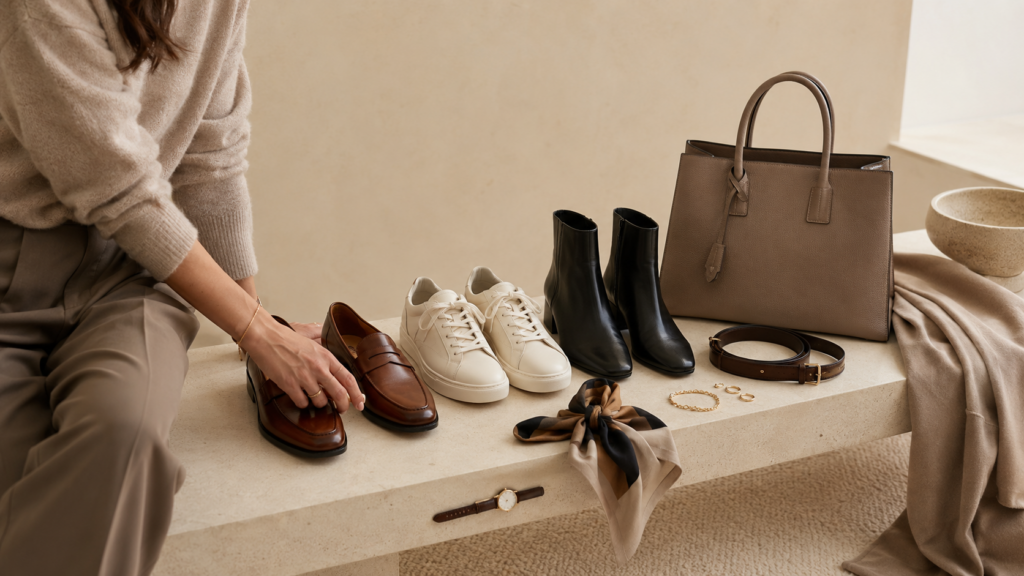
Shoes and Accessories as Practical Style Tools
Shoes do more than finish an outfit. They affect comfort, posture, proportion and formality. The same trousers can feel sporty with trainers, polished with loafers, rugged with boots or more dressed up with a refined heel. That makes footwear one of the most useful ways to repeat clothes without repeating the same mood.
On SFM Compile, shoe advice begins with the life of the wearer. A person who walks long distances needs cushioning, support and weather suitability. Someone dressing mainly for an office may value a polished shape that still feels comfortable after several hours. A versatile shoe is not simply neutral in colour; it must work with the trouser lengths, dresses and outerwear already in the wardrobe.
The guide to choosing versatile everyday shoes helps readers consider comfort and styling together. That avoids the familiar mistake of buying attractive shoes that look good in the box but never feel right outside the house.
Accessories deserve the same practical thought. A belt can define a waist or connect visually with footwear. A structured bag can sharpen soft clothing, while a relaxed canvas or woven style can make tailoring feel easier. Jewellery can add light, colour and personality without changing the clothing itself.
The advice on using accessories to complete an outfit shows how scale, texture and repetition create a connection. Shoes, bags and belts do not have to match perfectly. They simply need to support the same overall direction.
Trends Without the Pressure to Keep Up
Trends can be fun. They introduce unfamiliar proportions, revive old ideas and encourage people to try colours they may have ignored. The problem is not the trend itself; it is the pressure to treat every trend as a personal requirement.
SFM Compile encourages selective participation. A trend is more likely to last in a wardrobe when it connects with something the wearer already likes. Someone who has always enjoyed loose tailoring may continue wearing wide trousers after the current cycle changes. A person who loves bold colour may find a trending shade genuinely useful. The same items could feel like costumes on someone with different preferences.
Trying a trend does not require rebuilding a wardrobe. A new colour can enter through a top, scarf or bag. A different silhouette can be tested in a single affordable or second-hand piece. Before buying, it helps to imagine the item without the exact styling, model and setting that made it attractive. If it still works with at least three realistic outfits, it has a better chance of becoming useful.
Personal style is not the rejection of fashion. It is the ability to choose which parts of fashion deserve a place in everyday life.

Shopping Advice That Respects the Reader’s Budget
Good wardrobe planning is not about buying more expensive clothes. It is about making fewer purchases that immediately create another problem. A top is not truly affordable if it needs new trousers, different underwear and a special jacket before it can be worn.
The shopping guidance on SFM Compile asks readers to think in complete outfits. Before buying, they can name the shoes, bottoms and outerwear they would use with the garment. They can consider how often it needs washing, whether the fabric suits the climate and whether they are comfortable with its care instructions.
In a changing room, movement reveals more than a front-facing mirror. Sitting down exposes an uncomfortable waistband. Raising the arms shows whether a shirt pulls or rides up. Walking helps test a skirt, trouser hem or pair of shoes. Online, garment measurements are usually more useful when compared with a similar piece already owned than with a general size chart.
Quality also deserves a closer look. Flat seams, secure fastenings, even hems and fabric that recovers after a gentle stretch can signal better construction. Fibre content matters, but no single fibre guarantees quality. A thoughtful blend may add stretch, durability or resistance to wrinkles, while a poorly made natural-fibre garment can still lose its shape quickly.
For readers who want more value from their budget, the thrift and vintage shopping guide explains how to check condition, understand older sizing and spot alterations before bringing a piece home.
Caring for Clothes After the Purchase
A wardrobe cannot remain useful if its most-worn pieces quickly fade, stretch or lose their shape. Clothing care may not be the most glamorous side of fashion, but it has a direct effect on how outfits look and how often items need to be replaced.
The blog treats care as part of personal style. Washing at a suitable temperature, avoiding unnecessary tumble drying and giving clothes enough space to dry can protect colour and fabric. Knitwear often keeps its shape better when folded. Jackets benefit from supportive hangers. Shoes last longer when they are allowed to dry fully between wears.
Minor repairs make a difference too. A loose button takes minutes to secure but may tear the fabric if ignored. A small opening in a seam is easier to repair before it grows. Pilling, wrinkles and scuffed footwear can make good clothes look tired, so simple maintenance often improves an outfit as much as buying something new.
The practical advice in how to make clothes last longer helps readers protect fit, colour and texture without turning clothing care into a complicated ritual.
Style Advice for Changing Bodies and Changing Lives
Bodies change, routines change and tastes change. A wardrobe that worked five years ago may no longer suit the person opening it today. Useful fashion advice makes room for that reality instead of suggesting that readers must change themselves to fit old clothes.
At SFM Compile, comfort and self-respect are part of good style. Clothing should allow normal movement and support the way a person wants to present themselves. A size label is a manufacturing reference, not a measure of worth. Keeping an uncomfortable garment because it once fitted does not make a wardrobe more successful.
A thoughtful wardrobe review can separate current favourites from clothes needing a repair, alteration or new styling idea. Sentimental items can be stored with care instead of taking up everyday space. Pieces that no longer serve the wearer can be sold, donated or passed on when appropriate.
This process is not about creating an empty, perfectly organised closet. It is about making the clothes that remain easier to see and use. When the wardrobe reflects the present body and present routine, outfit decisions become calmer.
How to Use SFM Compile as an Ongoing Style Resource
Readers do not need to change everything at once. SFM Compile is most useful when each guide solves one real problem. Someone who dislikes every pair of jeans can begin with fit and rise. A reader whose outfits feel disconnected can look at colour repetition. Another person may discover that the wardrobe is fine but the shoes do not suit the trouser lengths.
Small experiments create better information than a rushed shopping trip. Readers can photograph outfits they enjoy, note which combinations feel comfortable and keep a short list of genuine wardrobe gaps. They can try a different tuck, cuff or shoe before deciding that a garment no longer works. If a purchase is needed, they can look for the specific feature that solves the problem rather than browsing without direction.
The blog’s connected guides allow readers to move naturally from one question to the next. An article about capsule wardrobes can lead to colour planning. A denim guide may reveal a need for better everyday shoes. A layering article can make an existing coat more useful. Each subject supports the others because that is how real wardrobes function.
Fashion feels less overwhelming when it becomes a series of understandable choices. SFM Compile gives readers room to enjoy clothes while remaining honest about comfort, cost and daily life. It supports a style that can be repeated, adjusted and lived in, not an outfit that works only for one photograph.