



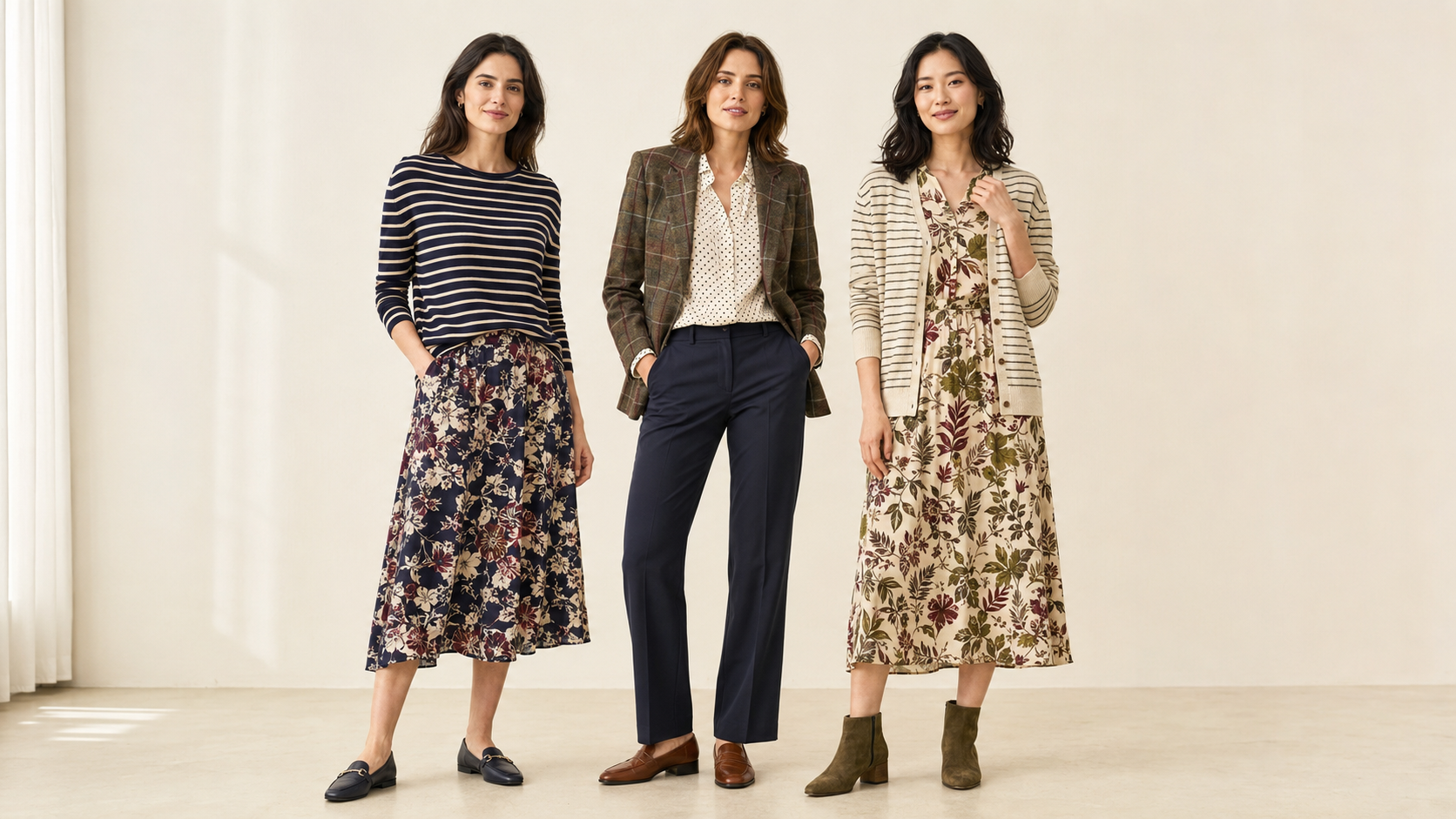
Learning how to mix prints and patterns can make familiar clothes feel more interesting without requiring an entirely new wardrobe. A striped shirt can change the mood of checked trousers, while a floral dress may become more versatile when worn with a patterned scarf, textured coat or contrasting accessory.
Pattern mixing often looks effortless in photographs, but successful combinations usually share a clear connection. The prints may repeat a colour, use different scales or have enough visual space between them to prevent competition.
Many people searching for how to mix prints and patterns assume they need an adventurous wardrobe. In reality, you can begin with pieces you already wear, such as a striped T-shirt, checked blazer, printed dress or patterned bag. The goal is not to combine the maximum number of prints. It is to create an outfit that feels balanced, comfortable and recognisably yours.
Why Pattern Mixing Can Improve a Wardrobe
Prints bring movement, colour and personality to clothing. They can also connect separate parts of a wardrobe by containing several colours that appear elsewhere.
Understanding how to mix prints and patterns helps you see a patterned garment as more than a statement piece. A floral skirt containing navy, cream and green might work with a striped navy top, a checked cream coat or a green patterned scarf. Those connections make the skirt easier to style than it first appears.
Pattern mixing can help you:
- Create new combinations from existing clothes
- Make simple outfit formulas feel less repetitive
- Connect several wardrobe colours
- Give classic garments a more personal appearance
- Use printed accessories more effectively
- Balance formal and casual pieces
- Make seasonal layering more visually interesting
- Wear favourite patterned clothes more frequently
You do not need to mix prints in every outfit. A wardrobe can include plain, tonal and patterned combinations. Pattern mixing is simply another styling option rather than a rule you must follow.
Begin With One Print You Already Wear
The easiest way to learn how to mix prints and patterns is to begin with a print that already feels comfortable. Do not start with two garments you rarely wear and hope they solve each other.
Choose a familiar piece such as:
- A striped shirt
- A checked blazer
- A floral dress
- A polka-dot blouse
- A patterned skirt
- A graphic knit
- A printed scarf
- An animal-print shoe or bag
Place the item beside the rest of your wardrobe and identify its main colours. Then notice its scale, contrast and overall mood. A small navy-and-white stripe feels different from a broad black-and-cream stripe, even though both are described as striped.
Next, find a second pattern that shares at least one characteristic with the first. It might contain the same colour, use a noticeably different scale or belong to a similarly relaxed style.
You do not need to wear the combination immediately. Begin by placing the garments together and looking at them from a short distance. Patterns that seem unrelated when examined closely may form a clear connection when seen as part of a complete outfit.
Use a Shared Colour to Connect Two Prints
A repeated colour is one of the most dependable links between patterns. It gives the eye something familiar to follow even when the shapes are different.
When deciding how to mix prints and patterns, examine every colour in each garment rather than focusing only on the most dominant shade. A floral blouse may appear mainly red, but its smaller cream and navy details could connect it to cream checked trousers or a navy striped jacket.
Useful combinations might include:
- Navy-and-white stripes with a navy floral skirt
- Burgundy checks with a floral print containing burgundy details
- A green patterned blouse with a green-and-cream scarf
- Black polka dots with a black-and-tan animal print
- A blue geometric shirt with blue pinstripe trousers
- A multicoloured dress with a checked coat repeating one of its quieter shades
The colours do not need to match perfectly. Slight differences can add depth. However, they should look related enough that the repetition appears intentional.
A consistent wardrobe palette makes this process easier because different prints naturally contain the same base and accent colours. The guide to choosing a wardrobe colour palette explains how neutrals, base shades and personal accents can support more outfit combinations.
Combine Different Pattern Scales
Scale describes the size of the pattern. A fine pinstripe has a small scale, while a wide stripe has a large scale. Tiny flowers, oversized checks and medium-sized polka dots each create a different amount of visual energy.
One of the most useful principles in how to mix prints and patterns is to combine noticeably different scales. Two patterns of equal size can compete because neither one takes a supporting role.
For example:
- Fine stripes with large flowers
- Small polka dots with broad checks
- A delicate geometric print with an oversized plaid
- Narrow pinstripes with a large patterned scarf
- Tiny florals with a bold striped cardigan
- A small animal print with a broad colour-block pattern
The larger print usually becomes the focal point, while the smaller one reads almost like texture. This creates a clearer visual hierarchy.
Similar scales can still work, especially when the colours are restrained, but they require more careful balance. If both patterns are bold, large and highly contrasting, consider separating them with a solid garment or allowing one to appear only in a small accessory.
Treat Stripes as a Flexible Foundation
Stripes are often the easiest pattern to combine because they are structured, familiar and available in many scales. A narrow stripe can behave almost like a solid colour when viewed from a distance.
For someone beginning to explore how to mix prints and patterns, a striped top provides a useful foundation. It can work with florals, checks, polka dots, animal prints and geometric designs.
Try combinations such as:
- Breton-striped top with a floral midi skirt
- Pinstripe trousers with a small polka-dot blouse
- Broad striped knitwear with a fine checked coat
- Vertical striped shirt beneath a patterned vest
- Narrow striped T-shirt with an animal-print bag
- Striped dress with a floral or geometric scarf
Pay attention to the direction of the stripes. Vertical and horizontal lines can work together when the difference is clear. Two sets of stripes may also combine successfully if one is narrow and the other is broad.
The stripe colour should relate to the second print or to another garment in the outfit. A navy stripe paired with a floral skirt containing navy will usually feel more connected than two completely unrelated colour stories.
Balance Busy Patterns With Visual Space
Some prints contain large areas of background colour, while others cover almost every part of the fabric. This difference affects how busy an outfit appears.
Understanding how to mix prints and patterns involves noticing the amount of empty or quiet space inside each design. A scattered floral print with a visible cream background may feel lighter than a dense floral in the same colours.
If one garment has a crowded pattern, pair it with a print that offers more visual space. For example, a dense floral skirt may work with a widely spaced striped top. A busy geometric blouse can sit comfortably beneath a blazer with a subtle windowpane check.
Fabric also changes the effect. A soft, faded print on linen will usually appear quieter than the same design on shiny fabric. Embroidery, texture and woven patterns can act like prints even when they use only one colour.
Step back from the mirror when evaluating the outfit. Close inspection can make every detail seem important, while normal viewing distance reveals which pattern actually dominates.
Decide Where You Want the Focus
Pattern naturally attracts attention. Its placement can influence the balance of an outfit and determine which garment becomes the focal point.
When considering how to mix prints and patterns, decide where you want the eye to land first. You might choose a boldly printed skirt and keep the upper print smaller, or wear a dramatic patterned jacket over quieter trousers.
Possible arrangements include:
- Large pattern below with a small pattern above
- Bold patterned coat over a subtle striped base
- Printed blouse with quiet checked trousers
- Patterned dress with a small printed accessory
- Graphic knitwear with a restrained patterned shoe
- Subtle patterned clothing with one bold bag
There is no universal rule about where a larger print should be worn. Choose placement according to your preferred proportions and the outfit’s overall effect.
The fit and shape of the garment matter too. A flowing floral skirt creates more movement than a fitted skirt in the same print. A large check across an oversized coat occupies more visual space than it would on a small bag.
Use a Solid Colour as a Bridge
A plain garment can create breathing room between two patterns. It can also repeat a shared colour and make the combination feel more deliberate.
While learning how to mix prints and patterns, use solid pieces strategically rather than assuming every visible garment must be printed.
A plain layer might be:
- A cardigan between a striped shirt and checked trousers
- A belt separating a printed blouse and patterned skirt
- A coat over a patterned dress and scarf
- A T-shirt beneath a checked jacket and printed trousers
- A waistcoat over a striped shirt
- A solid bag carried with two patterned garments
Imagine a floral skirt and striped shirt that share navy. Adding a plain navy cardigan gives the eye a quiet area while strengthening the colour connection.
Shoes can perform the same role. Simple black, brown, navy or cream footwear can ground an outfit containing two visible prints. The shoes do not have to disappear, but they should support the composition rather than introduce another unrelated idea.
Mix Two Prints Before Trying Three
Two-pattern outfits provide enough variety for most wardrobes. They are easier to repeat, layer and adjust for different occasions.
A practical approach to how to mix prints and patterns is to create several dependable two-print combinations before adding a third. Start with one dominant print and one supporting pattern.
Reliable pairings include:
- Stripes and florals
- Checks and stripes
- Polka dots and florals
- Animal print and stripes
- Geometric patterns and pinstripes
- Two different checks
- Two different floral scales
- Graphic knitwear and subtle plaid
Wear the combination at home for a short time and observe how it feels. A pattern mix may look appealing on a hanger but feel too noticeable during your normal day. Comfort includes emotional comfort as well as physical fit.
If the outfit feels overwhelming, reduce the visible area of one print. Button a plain jacket over the patterned top, replace patterned trousers with a printed bag or allow only the collar and cuffs of a shirt to show.
Add a Third Print Through a Small Detail
Three patterns can work when one appears in a limited area. A scarf, belt, shoe, bag or shirt collar can introduce the third design without dividing attention equally among all three.
Once you are comfortable with how to mix prints and patterns, try building the outfit in stages. Begin with two connected garments, then add a small print that repeats one of their colours.
For example:
- Striped shirt + floral skirt + animal-print belt
- Checked blazer + polka-dot blouse + patterned scarf
- Floral dress + striped cardigan + geometric bag
- Pinstripe trousers + printed top + patterned shoes
- Checked coat + striped knitwear + floral accessory
At least two of the three patterns should have a clear relationship. They might share black, cream or navy, while the third contributes a related accent colour.
Avoid making all three patterns equally large, bright and detailed unless a deliberately maximalist look reflects your style. A clearer hierarchy usually makes the outfit easier to wear.
Use Accessories as a Low-Risk Starting Point
Printed accessories allow you to experiment without committing to two large patterned garments. They can also make simple outfits more distinctive.
For anyone uncertain about how to mix prints and patterns, begin with combinations such as:
- Striped shirt with an animal-print belt
- Floral dress with a checked scarf
- Polka-dot blouse with patterned flats
- Checked trousers with a geometric bag
- Printed skirt with a striped headband
- Patterned coat with a small printed handbag
The accessory does not need to match exactly. A colour or similar level of contrast is often enough to create a relationship.
A patterned scarf is particularly useful because it can be tied in different ways, worn near the face or attached to a bag. Shoes and belts introduce less visible pattern, making them suitable for work or quiet everyday outfits.
The guide to accessorising an outfit offers more ideas for balancing colour, scale and placement without making every detail compete.
Mix Similar Patterns Carefully
Combining two versions of the same pattern can look intentional because the relationship is immediately understandable. The key is to create enough difference that the garments do not look like an unsuccessful match.
Try:
- Narrow stripes with broad stripes
- Small checks with oversized checks
- Tiny flowers with large botanical prints
- Small polka dots with widely spaced larger dots
- Fine herringbone with bold plaid
- Two animal prints in related colours
If both patterns use similar colours, varying the scale may be enough. If their scales are close, change the colour intensity or background shade.
Two floral prints can work when one has a dark background and the other has a lighter one. Two checks may combine when one is subtle and tonal while the other is bold and contrasting.
Avoid choosing prints that are almost identical but slightly misaligned in colour or scale. That combination can appear accidental, particularly when the garments meet directly.
Combine Different Pattern Families
Contrasting pattern families often create the most interesting outfits. Organic designs such as florals, leaves and animal prints can balance structured designs such as stripes, checks and geometric shapes.
Classic combinations include:
- Floral and stripe
- Plaid and polka dot
- Animal print and check
- Botanical print and pinstripe
- Geometric pattern and floral
- Paisley and stripe
A structured pattern gives the outfit order, while a more irregular print introduces movement. This contrast is one reason stripes and florals work so reliably together.
Keep another feature consistent. The prints might share a colour, similar fabric weight or an equally muted finish. Without any connection, the outfit can look like several unrelated ideas placed together.
Consider Fabric Weight and Texture
Pattern is not only created through colour. Woven checks, cable knitwear, quilting, lace, embroidery and textured fabrics can all influence how visually busy an outfit feels.
A checked wool coat has more weight than a checked silk-style scarf. A small floral on light cotton feels different from the same floral on velvet. These qualities affect how prints combine.
Pairing a heavy patterned coat with a delicate printed dress can create useful contrast, but the coat will naturally dominate. A patterned satin blouse and glossy printed skirt may compete because both surfaces reflect light.
Texture can also substitute for a second print. A striped shirt with herringbone trousers offers pattern mixing even when both pieces use neutral colours. The effect is subtle but still visually rich.
During cold weather, the advice on layering clothes without looking bulky can help you balance pattern with fabric weight, garment length and practical warmth.
Keep the Silhouette Clear
An outfit can contain successful colours and prints but still feel confusing if every garment has a complicated shape. Pattern mixing becomes easier when the underlying silhouette is familiar.
Use easy everyday outfit formulas as the structure beneath the prints. For example:
- Striped top + floral skirt + simple shoes
- Checked blazer + printed blouse + straight trousers
- Patterned dress + cardigan + ankle boots
- Printed shirt + checked trousers + loafers
- Graphic knitwear + patterned skirt + long coat
The garments should still fit comfortably and create proportions you enjoy. A busy print cannot correct sleeves that restrict movement, trousers that drag or a waistband that shifts throughout the day.
If both patterns appear on loose, voluminous garments, consider adding definition through a tuck, shorter layer or visible wrist and ankle. This is optional, but it can help separate the shapes.
The guide to how clothes should fit explains how shoulders, sleeves, waistbands and hems affect the complete outfit.
Adapt Pattern Mixing to Your Personal Style
Pattern mixing does not need to look bold or theatrical. Its intensity should reflect the way you normally dress.
Someone with a classic style might wear a striped shirt with checked trousers in navy, cream and grey. A romantic wardrobe could combine two floral scales. A minimalist dresser might use pinstripes with a subtle woven check, while someone who enjoys maximalism may combine saturated florals, geometric prints and patterned accessories.
Your version of how to mix prints and patterns might involve only a small printed scarf beside a striped top. That is just as valid as an outfit containing a patterned coat, dress and bag.
The process of finding your personal style can help you identify whether you prefer playful, polished, relaxed, dramatic or understated combinations.
Do not increase the amount of pattern simply because an outfit appears too simple in a photograph. Clothing is worn in motion and in real surroundings. What seems quiet against a blank wall may feel perfectly expressive during an ordinary day.
Create Patterned Work Outfits
Pattern mixing can work in professional settings when the colours, fit and contrast suit the dress code.
Start with familiar workwear patterns:
- Pinstripes
- Windowpane checks
- Herringbone
- Small polka dots
- Fine stripes
- Restrained geometric prints
- Muted florals
Try pinstripe trousers with a small printed blouse, or a checked blazer over a striped shirt. Keep one print subtle and use dependable workwear colours such as navy, charcoal, cream, brown or burgundy.
A solid jacket can reduce the visible area of a printed blouse during formal meetings. Patterned shoes, scarves and bags offer another way to experiment without changing the main outfit.
Consider the distance from which the print will be seen. Very small, high-contrast patterns can sometimes create visual distortion on video calls, while broader or lower-contrast designs usually appear calmer on screen.
Use Patterns in Casual Outfits
Casual clothing gives you more freedom to combine scale, colour and fabric. Denim is especially useful because it acts as a visual neutral beside many prints.
Examples include:
- Striped T-shirt + floral skirt + denim jacket
- Checked shirt + graphic T-shirt + jeans
- Printed trousers + striped knitwear + trainers
- Floral dress + patterned scarf + boots
- Animal-print cardigan + striped top + dark denim
- Checked coat + graphic sweatshirt + simple trousers
A casual outfit can still have a clear focal point. If the trousers are brightly patterned, keep the jacket or shoes quieter. If the coat is the strongest piece, allow the clothing beneath it to provide a supporting pattern.
Comfort remains essential. Patterned clothing should work with the same practical shoes, bags and outerwear you use regularly.
Adjust Patterns Across the Seasons
Seasonal changes affect colour, fabric and the number of visible layers. They can create new opportunities for pattern mixing.
In warmer weather, try:
- Striped linen with floral cotton
- Printed dress with patterned sandals
- Lightweight checked trousers with a simple printed top
- Floral skirt with a striped vest
- Patterned scarf tied to a plain bag
During colder months, try:
- Checked coat over striped knitwear
- Floral dress with patterned tights
- Herringbone trousers with a geometric jumper
- Plaid skirt with a small printed blouse
- Animal-print accessory with a striped scarf
When working out how to mix prints and patterns across seasons, keep your main wardrobe colours consistent. You can then change the fabric weight and pattern scale without rebuilding every combination.
Winter layers may reveal only small parts of each print. A striped collar beneath a checked coat can be enough. Summer clothing exposes more of the garment, so the relationship between prints becomes more noticeable.
Shop for Patterns That Connect to Your Wardrobe
Printed clothing can be attractive in isolation but difficult to combine at home. Before buying, identify the colours, scale and garments the new piece would need.
When applying how to mix prints and patterns while shopping, ask:
- Does the print contain colours I already wear?
- Can I combine it with at least two existing garments?
- Does its scale add something different to my wardrobe?
- Will it work with my usual shoes and outerwear?
- Is the pattern suitable for the garment’s shape?
- Can I wear it as part of a familiar outfit formula?
- Does it support my real routine?
- Do I like the complete garment or only the print?
- Is the fabric comfortable and practical?
- Will the print still appeal to me after the current trend changes?
Take photographs of your most-used patterned clothes and compare them with possible purchases. Colour names are unreliable, and memory may not capture the exact depth or undertone.
Second-hand shops can be excellent places to find distinctive prints, but inspect pattern alignment, fading and fabric condition. The thrift and vintage shopping guide explains how to evaluate older garments before buying.
Avoid Common Pattern-Mixing Mistakes
People learning how to mix prints and patterns often focus so heavily on the designs that they forget the complete outfit.
Common mistakes include:
- Combining prints without any shared feature
- Using two patterns with the same scale and intensity
- Introducing too many unrelated colours
- Ignoring the shapes and fit of the garments
- Adding patterned accessories after the outfit already feels complete
- Copying a bold combination that does not suit your style
- Treating stripes or animal print as completely neutral
- Buying a new pattern without checking existing outerwear
- Assuming every printed garment needs another pattern
- Wearing uncomfortable clothes because the combination photographs well
- Trying to make every part of the outfit equally noticeable
- Following rigid rules instead of testing the actual garments
Another mistake is believing the combination must be immediately understood by everyone. Personal style does not require universal approval. If the colours connect, the proportions feel right and you enjoy wearing the outfit, the mix is doing its job.
Test Patterned Outfits in Real Conditions
A mirror provides only one view. Photograph the outfit from a normal distance and check it in daylight, indoor lighting and motion.
Notice:
- Which print attracts attention first
- Whether one pattern disappears entirely
- Whether the colours remain connected
- How the outfit looks beneath outerwear
- Whether the shoes support the visual weight
- How the patterns change when you sit or walk
- Whether a bag covers an important part of the design
- Whether you feel comfortable being noticed
Wear the combination at home before using it for a long workday or event. This gives you time to adjust without pressure.
If the outfit feels too busy, remove one patterned accessory or reduce the visible area of a garment. If it feels disconnected, repeat a colour through shoes, a belt, jewellery or a solid layer.
Build Your Own Reliable Pattern Combinations
The most useful approach to how to mix prints and patterns is to develop a small group of combinations based on your wardrobe.
Begin with three pairings:
- One patterned top with a patterned bottom
- One printed garment with a patterned accessory
- One patterned layer over another print
Photograph the successful outfits and record what connects them. You may discover that navy appears in nearly every combination, that you prefer florals with stripes or that small prints feel more comfortable near your face.
These observations become personal styling guidelines. They are more useful than universal pattern rules because they reflect your clothes, proportions and routine.
A capsule wardrobe can include patterns as long as they connect to its base colours and outfit formulas. Printed pieces do not automatically reduce versatility.
Care for patterned garments properly, particularly when fading could weaken their colour connections. The guide to making clothes last longer includes practical advice on washing, drying and storing different fabrics.
Ultimately, how to mix prints and patterns comes down to creating visible relationships. Start with one familiar print, repeat a colour, vary the scale and decide which garment should lead. Use plain pieces when the outfit needs space, introduce additional patterns gradually and keep the silhouette comfortable.
A successful pattern mix does not need to be loud. It only needs to feel connected, practical and personal enough that you want to wear it again.
