



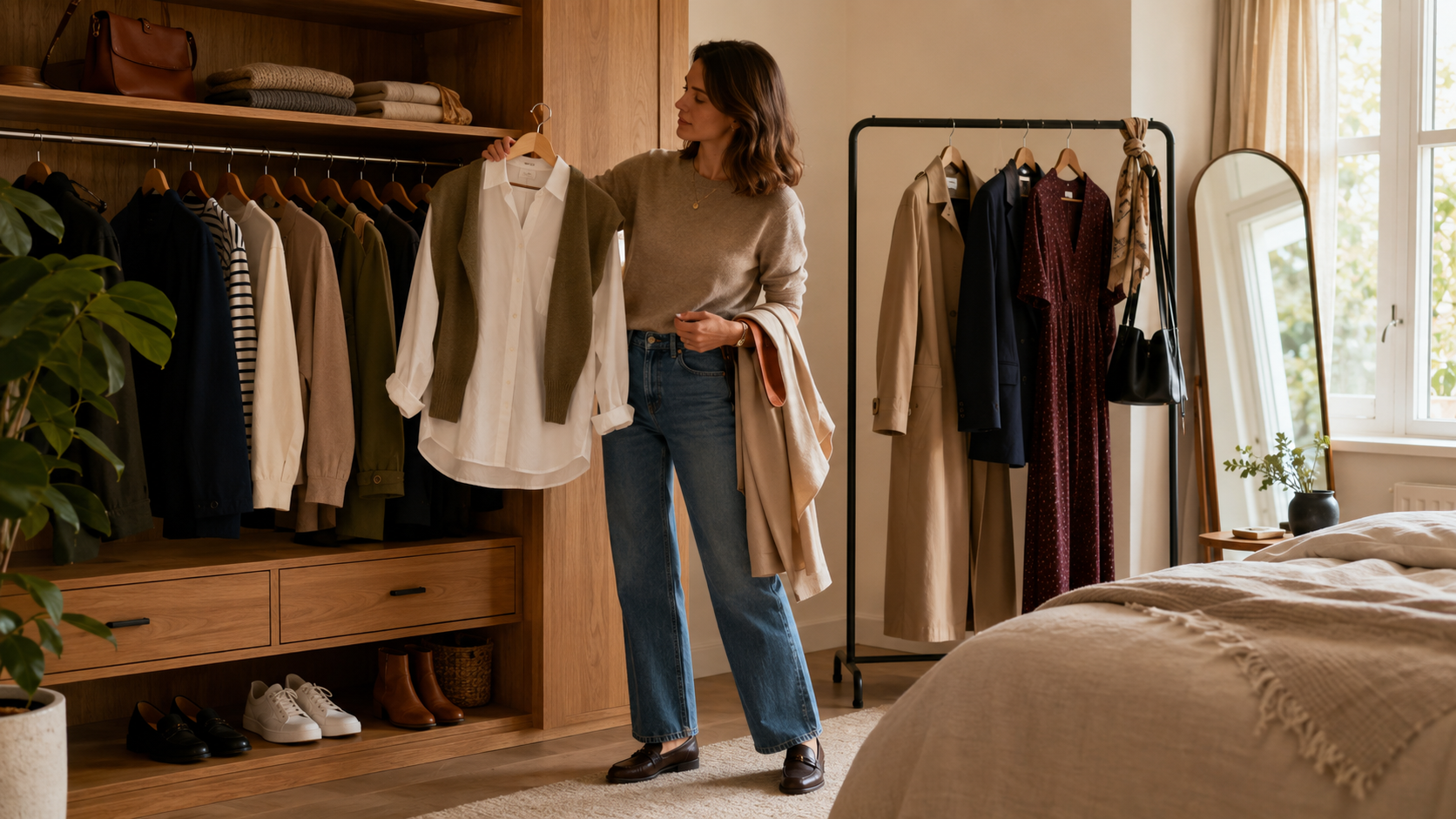
Learning how to build a capsule wardrobe is not about reducing your closet to a tiny collection of beige clothes. It is about creating a wardrobe in which most pieces work together, suit your daily routine and feel comfortable enough to wear regularly.
A good capsule wardrobe can make mornings easier because fewer clothes are competing for attention. Instead of owning many separate items that only create one outfit, you have a practical selection of tops, bottoms, layers, shoes and accessories that can be mixed in different ways.
The most useful answer to how to build a capsule wardrobe begins with your actual life. Someone working in a formal office needs different clothes from a student, a remote worker or a parent spending much of the day on the move. Your climate, preferred colours, laundry routine and comfort needs matter more than any standard list of wardrobe essentials.
You also do not need to throw everything away and start again. If you are wondering how to build a capsule wardrobe, begin with the clothes you already enjoy wearing. Those pieces reveal which colours, fabrics and silhouettes deserve a larger place in your wardrobe.
What a Capsule Wardrobe Should Actually Do
A capsule wardrobe is a carefully chosen group of clothes that can produce several complete outfits. The exact number of pieces is less important than the relationship between them.
Some people feel comfortable with 25 pieces, while others need 40 or more because their work, weather or social life requires greater variety. Shoes, accessories, activewear and occasion clothing may be included or managed separately.
The point is not to reach a perfect number. The purpose is to remove unnecessary difficulty from getting dressed.
Understanding how to build a capsule wardrobe means focusing on usefulness rather than restriction. Every piece should serve at least one clear purpose, and most everyday garments should work with several other items. A shirt that matches three pairs of trousers is more valuable than one that requires a special skirt, unusual shoes and a particular jacket.
A successful capsule should help you:
- Create complete outfits quickly
- Wear more of the clothes you own
- Identify genuine wardrobe gaps
- Reduce unsuccessful impulse purchases
- Repeat favourite outfit shapes without looking identical
- Adapt clothing to different temperatures and occasions
- Keep your personal style visible
The SFM Compile fashion and personal-style blog treats a capsule as a flexible wardrobe system rather than a strict fashion challenge. It should support your routine, not make you feel guilty for owning an extra coat or enjoying a bold print.
Begin With an Honest Look at Your Week
Before choosing colours or writing a shopping list, think about how you spend a normal week. Capsule wardrobes often fail because they are planned around an imagined lifestyle.
Write down your regular activities and estimate how often they occur. These might include office work, studying, commuting, childcare, working from home, exercise, errands, social plans, religious gatherings or formal events.
The first practical step in how to build a capsule wardrobe is matching the amount of clothing in each category to the amount of time you spend there. If five days of your week are casual, most of your wardrobe should not consist of formal dresses or delicate shoes.
Consider the details of each activity too. A casual workplace may still require polished clothing. A commute involving a long walk changes the type of shoes you need. Working from home may call for soft, comfortable pieces that can look presentable during a video meeting.
Climate should shape the plan from the beginning. Someone living in a warm region may rely on breathable shirts, loose trousers and light layers. A person dealing with a long winter needs knitwear, coats, boots and base layers that fit comfortably together.
Your laundry habits matter as well. If you wash clothes once a week, you need enough everyday pieces to reach laundry day. A capsule that looks beautifully minimal but requires washing every other evening will quickly become frustrating.
Review Your Existing Wardrobe Before Shopping
A wardrobe review shows what you genuinely wear and prevents you from buying duplicates. Set aside enough time to look at your clothes without rushing.
Start by separating the items you wear frequently. Do not choose the pieces you believe should be your favourites. Choose the ones that actually leave the wardrobe.
Look for patterns among them:
- Which colours appear repeatedly?
- Do you prefer fitted or relaxed clothing?
- Which waistlines and trouser shapes feel best?
- Are your favourite fabrics soft, crisp, heavy or lightweight?
- Which shoes do you reach for most often?
- Do your preferred clothes require little maintenance?
- Which layers work with several outfits?
Anyone learning how to build a capsule wardrobe should pay close attention to these patterns. They reveal your real preferences more accurately than a generic checklist found online.
Next, review the clothes you rarely wear. A neglected item may have a poor fit, an uncomfortable fabric or a colour that does not work with anything else. Some clothes suit occasions that rarely happen, while others belong to an earlier version of your lifestyle.
Place the clothes into practical groups:
- Keep and wear regularly
- Keep for a specific season or occasion
- Repair or alter
- Restyle before deciding
- Sell, donate or pass on
- Store for sentimental reasons
You do not have to remove every questionable item immediately. Create a temporary section and try wearing those clothes over the next few weeks. Real use will make the decision clearer.
Define Your Personal Style Direction
A capsule wardrobe should look like it belongs to you. If every item is chosen only because it is versatile, the result can feel safe but strangely impersonal.
A central part of how to build a capsule wardrobe is deciding how you want your clothing to feel. Choose three descriptive words that capture your preferred direction. Examples include:
- Relaxed, modern and polished
- Classic, practical and understated
- Colourful, creative and comfortable
- Soft, romantic and vintage-inspired
- Minimal, structured and confident
- Casual, sporty and clean
These words can guide decisions without creating rigid rules. A piece does not need to match all three perfectly, but it should support the overall direction.
Look at your most-worn clothes and saved outfit photographs for repeated details. You may be drawn to clean lines, visible texture, oversized coats, fitted knitwear, dark denim, bright accessories or soft tailoring.
The guide to finding your personal style naturally can help you recognise these patterns before you begin selecting capsule pieces.
Choose a Flexible Colour Palette
Colour creates the connection that allows a smaller wardrobe to produce more combinations. This does not mean everything needs to be black, white, grey or beige.
When considering how to build a capsule wardrobe, begin with two or three base colours. These are the shades most likely to appear in trousers, coats, jackets, shoes and bags. Common options include:
- Black
- Navy
- Grey
- Cream
- Camel
- Chocolate brown
- Olive
- Denim blue
Add two to four supporting or accent colours. These can reflect your personality and may appear in shirts, dresses, knitwear, scarves or jewellery. Burgundy, rust, forest green, cobalt, blush pink and mustard can all fit comfortably into a capsule when they connect with the base colours.
You do not have to make every colour work with every other colour. The aim is simply to create enough compatibility that most garments have several believable partners.
Patterns can help connect the palette. A striped shirt containing navy and cream can work with both colours. A printed scarf may include one base shade and two accent colours, making separate outfits feel related.
If colour coordination is one of your main difficulties, the guide to choosing a wardrobe colour palette explains how to use base shades, accents, contrast and undertones without becoming trapped by strict colour rules.
Select Core Pieces Based on Your Routine
Core pieces form the working centre of a capsule. They are not necessarily plain, expensive or traditionally classic. They are simply the clothes you can depend on.
A useful method for how to build a capsule wardrobe is to select core pieces by category rather than copying someone else’s complete list.
Your everyday capsule might include:
- Three to five casual tops
- Two to four smarter tops or shirts
- Two or three pairs of trousers
- One or two pairs of jeans
- One or two skirts or dresses, if you wear them
- Two lightweight layers
- One or two heavier layers
- Suitable outerwear
- Three or four pairs of everyday shoes
These numbers are only starting points. Someone who wears dresses daily may need fewer separate tops and bottoms. A person working in a formal office may require more shirts and tailored trousers. Someone living in a rainy climate may need several practical outerwear options.
Choose pieces according to frequency of wear. A coat worn every day deserves more attention than an event outfit worn twice a year. The same is true of jeans, work trousers and everyday shoes.
Denim often plays an important role because it can move between relaxed and polished outfits. The guide to choosing the right jeans can help you compare rises, washes and leg shapes before deciding which pair belongs in your capsule.
Build Complete Outfits Before Buying More
A capsule is made from outfits, not isolated garments. A wardrobe may contain individually attractive pieces and still feel impossible to use if those pieces do not work together.
One of the most reliable parts of how to build a capsule wardrobe is testing complete combinations before making a shopping list.
Place a core bottom on the bed and try it with several tops, layers and shoes. Repeat the process with each pair of trousers, each skirt and every dress. Take photographs of the combinations that work.
Try to create at least three outfits around each major piece. They do not have to be completely different. Changing the shoes, jacket or accessories can be enough to move an outfit from casual to smart casual.
For example, dark straight-leg jeans might work with:
- A T-shirt, overshirt and trainers
- A fine knit, blazer and loafers
- A button-down shirt, long coat and ankle boots
- A simple top, cardigan and flat shoes
This process reveals missing connections. You may not need more trousers; you may need one layer that works with the trousers already owned. You may discover that several dresses remain unworn because none of your jackets suits their length.
The collection of easy everyday outfit formulas provides combinations that can be adapted to different colours, budgets and personal styles.
Pay Attention to Fit and Movement
Versatility means very little when a garment is uncomfortable. Clothes that pinch, pull, slip or require constant adjustment will not become reliable capsule pieces.
Learning how to build a capsule wardrobe therefore includes being honest about fit. Ignore the size printed on the label and focus on how the garment behaves on your body.
Check whether:
- Shoulder seams sit comfortably
- Buttons lie flat without pulling
- Waistbands remain comfortable when sitting
- Trouser hems work with your usual shoes
- Sleeves allow easy arm movement
- Skirts and dresses remain comfortable while walking
- Layers fit beneath jackets and coats
- The garment stays in place without repeated adjustment
Relaxed clothing still needs a deliberate fit. An oversized blazer should have a shoulder shape that supports its volume. Wide trousers should sit securely at the waist and fall cleanly through the leg.
Small alterations can make existing clothes much more useful. Shortening a hem, moving a button or adjusting a waistband may cost less than replacing the garment.
The detailed guide to how clothes should fit can help you evaluate shoulders, waistlines, hips, sleeves and hems more confidently.
Choose Fabrics That Suit Real Life
Fabric affects comfort, appearance, maintenance and the way clothing layers. A practical capsule needs a mixture of textures and weights that suit the climate.
Cotton is comfortable and widely available, although its behaviour depends on the weave and construction. Linen is breathable but wrinkles easily. Wool can provide warmth without extreme bulk. Denim adds structure and durability, while carefully chosen synthetic fibres may improve stretch, weather resistance or drying time.
Part of how to build a capsule wardrobe is accepting your maintenance limits. If you dislike ironing, choose fabrics that remain presentable with minimal effort. If dry cleaning is inconvenient, avoid filling the capsule with garments that require it.
Read the care label before buying. A beautiful item can become a burden when its maintenance does not suit your routine.
Texture also prevents a limited colour palette from feeling flat. A cream wardrobe, for example, can still look varied when it includes cotton, ribbed knitwear, leather, linen and soft wool.
Treat Shoes as Part of the Capsule
Shoes affect the usefulness of almost every outfit. The right pair must work with your trouser lengths, dresses, climate and daily amount of walking.
When planning how to build a capsule wardrobe, do not leave footwear until the end. Build outfits with shoes included so you can see whether the proportions and level of formality make sense.
A practical shoe capsule might contain:
- Comfortable everyday trainers
- Loafers, flats or another polished flat shoe
- Weather-appropriate boots
- A dressier shoe for events
- Sandals or breathable shoes for warm weather
You may need fewer or more depending on your life. Someone who walks long distances will place greater importance on cushioning and support. A formal workplace may require several polished options.
Neutral footwear is useful, but neutral does not always mean black. Brown, tan, cream, grey, navy and metallic shades may connect more naturally with your colour palette.
The guide to choosing versatile everyday shoes explains how to consider comfort, climate and styling at the same time.
Use Accessories to Add Variety
A small wardrobe does not have to produce repetitive outfits. Accessories can change the mood of familiar clothing without taking up much space.
Belts can define the waist or introduce structure. Scarves add colour and pattern. Jewellery changes the visual focus around the face and neckline. Bags can make an outfit feel relaxed, professional or evening-ready.
Understanding how to build a capsule wardrobe includes choosing accessories that connect with several outfits. A bag should work with your everyday outerwear and shoes. A belt should suit the rise and loops of the trousers you actually wear.
Avoid buying accessories only because they match one specific outfit. Look for pieces that repeat a colour, texture or shape already present in the wardrobe.
The guide to using accessories to complete an outfit offers practical advice on scale, colour and visual balance.
Create Seasonal Rotations
A capsule wardrobe does not need to remain identical throughout the year. Seasonal rotation keeps the active wardrobe relevant and prevents unsuitable clothes from creating visual clutter.
A realistic approach to how to build a capsule wardrobe is to maintain a dependable core and change the seasonal pieces around it.
Jeans, shirts, light knitwear and some shoes may remain useful throughout much of the year. Heavy coats and thick jumpers can be stored during warmer months, while linen, sandals and very light dresses may be put away during winter.
Transitional pieces are especially valuable. Cardigans, overshirts, lightweight jackets and scarves can adjust an outfit when the temperature changes during the day.
Before each season, review stored clothes for damage, stains and fit. This gives you time to repair or replace something before you suddenly need it.
For colder months, layering clothes without looking bulky can help you combine different lengths, necklines and fabric weights.
Shop Only for Clearly Identified Gaps
Once you have reviewed, coordinated and restyled your existing clothes, you can create a focused shopping list.
Knowing how to build a capsule wardrobe makes this list specific. Instead of writing “need more tops,” write “need a washable light-coloured shirt that works with navy trousers, jeans and the brown skirt.”
Before buying, ask:
- Can I create at least three outfits with this item?
- Does it work with my current shoes?
- Can I layer it with my jackets or coats?
- Does the colour belong with my existing palette?
- Is the fabric comfortable for my climate?
- Can I follow the care instructions?
- Does it support my personal-style words?
- Am I filling a real gap or reacting to a trend?
Second-hand shopping can be useful when looking for better fabrics or classic construction at a lower price. The thrift and vintage shopping guide explains how to check condition, older sizing and previous alterations.
Avoid buying several replacements at once unless you are confident about the style. Wear one new item for a while and notice how it performs before purchasing similar versions.
Common Capsule Wardrobe Mistakes
People sometimes approach how to build a capsule wardrobe as a challenge that must be completed perfectly. That pressure can lead to unnecessary decluttering and another round of rushed shopping.
One common mistake is removing too much too quickly. A wardrobe may look neat after a dramatic clear-out but become impractical when weather changes or an unexpected occasion appears.
Another mistake is buying a ready-made capsule. Even when the garments are good quality, a standard package cannot account for your body, climate, job and personal preferences.
Other common problems include:
- Choosing only neutral colours despite enjoying brighter shades
- Buying too many basics and too few interesting pieces
- Ignoring footwear while planning outfits
- Keeping uncomfortable garments because they appear versatile
- Choosing aspirational clothes instead of practical ones
- Setting an arbitrary limit that does not suit the laundry schedule
- Replacing usable clothes merely to create a matching aesthetic
- Treating outfit repetition as failure
Repeating clothes is the purpose of a capsule. Variety should come from thoughtful combinations, not constant purchasing.
Keep the Wardrobe Flexible
The most realistic approach to how to build a capsule wardrobe allows the wardrobe to change. Bodies, jobs, climates and personal tastes do not remain fixed forever.
Review the capsule every few months. Notice which clothes were worn frequently, which combinations felt successful and which supposed essentials stayed untouched. Repair damaged favourites and update your shopping list only when a repeated gap becomes clear.
Clothing care also protects the value of your capsule. Wash garments only when needed, use suitable temperatures and store knitwear, jackets and shoes correctly. The guide to making clothes last longer covers simple habits that protect colour, shape and fabric.
A capsule wardrobe should never feel like a punishment. Keep the event dress you love, the colourful jacket that lifts simple outfits and the sentimental pieces that matter to you. They do not all have to belong to the everyday core.
Ultimately, how to build a capsule wardrobe comes down to understanding what you wear, creating useful connections between those clothes and shopping only when a real need appears. When the wardrobe reflects your routine and personality, fewer pieces can produce more outfits without making your style feel limited.
