

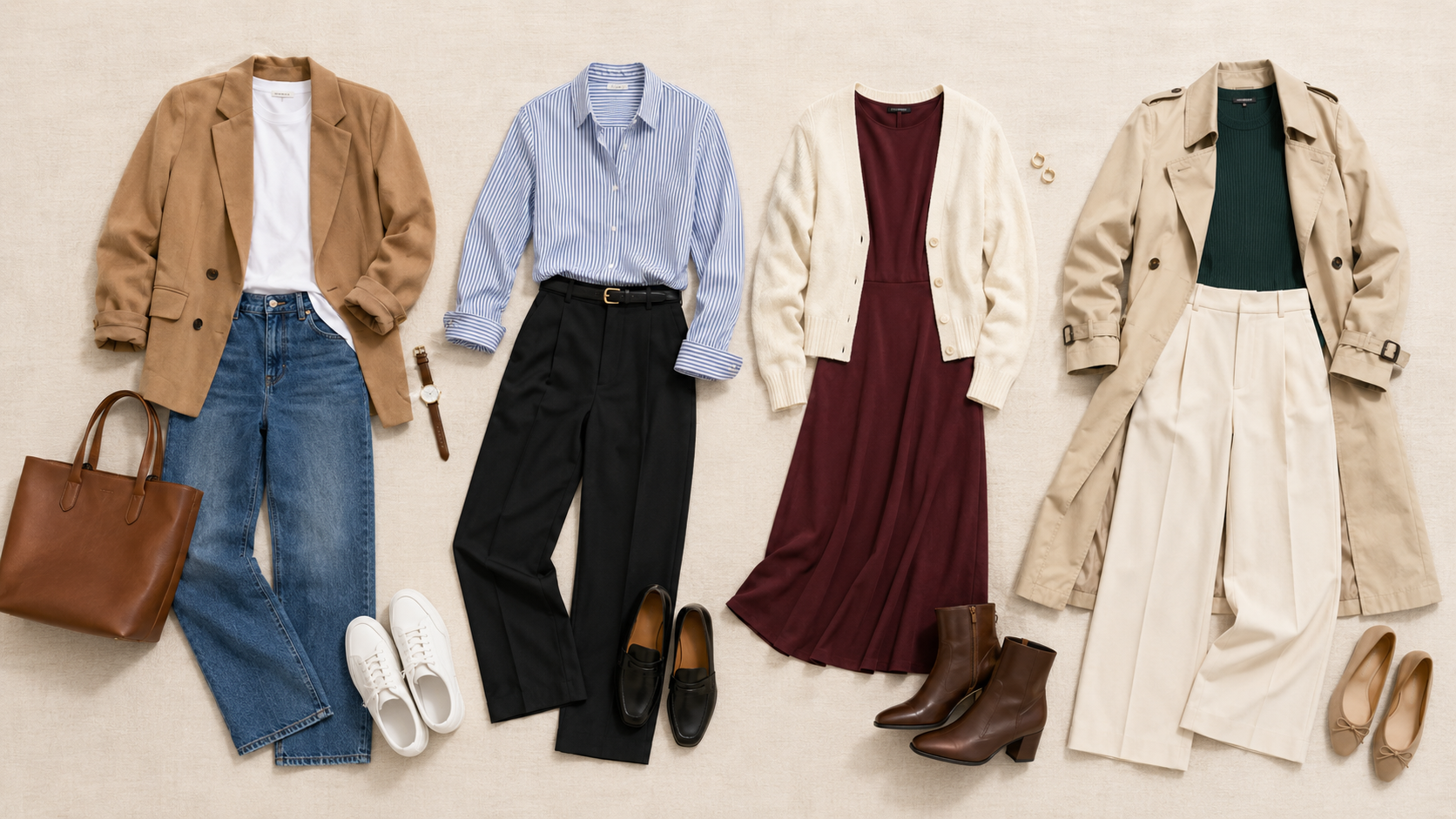
Using easy everyday outfit formulas can remove much of the uncertainty from getting dressed. Instead of trying to invent a completely new look every morning, you begin with a reliable combination of garments and change the colours, fabrics, layers or accessories.
An outfit formula is not a uniform. It is a flexible structure such as jeans, a simple top and a jacket. One day, that combination might include straight-leg denim, a white T-shirt and a blazer. On another day, it could become relaxed jeans, a striped knit and a denim overshirt.
Many people search for easy everyday outfit formulas because they own enough clothes but struggle to turn them into complete looks. Individual garments may be attractive, yet the wardrobe can still feel confusing when tops, bottoms, shoes and outerwear have not been considered together.
The right formulas make your existing wardrobe more useful. They also help you notice which pieces fit your routine, which combinations express your personal style and which apparent wardrobe gaps are not genuine gaps at all.
Why Outfit Formulas Make Dressing Easier
An outfit formula gives you a starting point. It identifies the types of garments that usually work together without deciding every detail in advance.
For example:
- Fitted top + wide-leg trousers + structured layer
- Straight jeans + shirt + comfortable flats
- Simple dress + cardigan + practical boots
- Tonal base + contrasting jacket
- Skirt + knitwear + loafers
- Matching set + simple accessories
The best easy everyday outfit formulas work because they balance shape, comfort and practicality. They can be adapted to different seasons, dress codes and colour preferences.
Formulas can help you:
- Get dressed more quickly
- Create more outfits from clothes you already own
- Repeat successful proportions
- Coordinate shoes and outerwear earlier
- Pack more efficiently
- Identify useful wardrobe basics
- Avoid buying isolated statement pieces
- Make outfit repetition feel intentional
A formula should solve a real dressing situation. Someone working from home may need comfortable combinations that still feel presentable on video calls. A commuter may prioritise layers, supportive shoes and a practical bag. A formal workplace will require different formulas from a casual creative environment.
Begin With Outfits You Already Repeat
Before collecting new easy everyday outfit formulas, examine the combinations you already wear. Your most repeated outfits often reveal more about your style than a mood board or shopping list.
Choose five outfits that have felt comfortable and appropriate recently. Photograph them or write down their basic structure without focusing on the individual garments.
A specific outfit such as black trousers, a cream jumper, a camel coat and loafers might become:
Straight trousers + soft knitwear + long outer layer + polished flat shoes
A weekend outfit of blue jeans, a white T-shirt, trainers and a utility jacket might become:
Denim + simple top + casual jacket + comfortable shoes
Look for repeated features:
- Do you usually balance loose bottoms with a neater top?
- Do you prefer long layers over short jackets?
- Are your successful outfits tonal or high-contrast?
- Do you feel better in structured or relaxed clothing?
- Do you regularly add a belt or scarf?
- Which shoes appear most often?
- Do you tuck, half-tuck or leave tops untucked?
- Which necklines and sleeve lengths feel natural?
The guide to finding your personal style can help you recognise the colours, silhouettes and details that already connect your favourite outfits.
Formula One: T-Shirt, Jeans and a Third Layer
A T-shirt and jeans form one of the most adaptable easy everyday outfit formulas, but the result depends on fit, footwear and the third layer.
Start with jeans that feel comfortable when sitting and walking. Add a T-shirt with enough shape to look deliberate rather than stretched or shapeless. The third piece might be a blazer, cardigan, overshirt, trench coat, denim jacket or lightweight utility jacket.
Possible combinations include:
- White T-shirt + straight blue jeans + navy blazer + loafers
- Striped T-shirt + dark denim + trench coat + trainers
- Black T-shirt + relaxed jeans + denim jacket + ankle boots
- Fitted T-shirt + wide jeans + cropped cardigan + ballet flats
- Graphic T-shirt + black jeans + overshirt + casual trainers
Small styling changes can alter the proportions. A full tuck defines the waist, while a half-tuck gives a relaxed top more shape. Rolling the sleeves can make a simple T-shirt feel more intentional.
Your shoes determine whether the outfit appears casual, polished or practical. Trainers support walking, loafers add structure, and boots make the same formula suitable for colder weather.
If denim is central to your wardrobe, the guide to choosing the right jeans explains how wash, rise and leg shape affect the rest of an outfit.
Formula Two: Shirt, Trousers and Polished Flat Shoes
A shirt with trousers is useful for work, appointments, travel and smart-casual outfits. It can feel formal or relaxed depending on the fabric and styling.
This is one of the most dependable easy everyday outfit formulas because each piece can be adjusted without changing the underlying structure.
Try:
- Cotton shirt + tailored trousers + loafers
- Linen shirt + wide trousers + leather sandals
- Soft blouse + straight trousers + ballet flats
- Oversized shirt + slim trousers + ankle boots
- Striped shirt + cropped trousers + clean trainers
If the shirt and trousers are both loose, create definition somewhere. You might tuck the shirt, roll the sleeves, open the neckline or add a structured bag. When trousers are wide, a shorter or more fitted top can help the silhouette feel balanced.
The formula does not require a traditional button-down shirt. A collarless blouse, silk-style shirt, denim shirt or relaxed popover can perform the same role.
For a more casual result, leave the shirt open over a fitted vest or T-shirt. This creates an easy layer without adding the weight of a jacket.
Formula Three: Knitwear, Straight Trousers and a Structured Coat
During cooler weather, knitwear often becomes the centre of an outfit. Combining it with straight trousers and a structured outer layer prevents the look from becoming visually heavy.
Among the most practical easy everyday outfit formulas, this combination works especially well when you need warmth without excessive bulk.
Possible versions include:
- Fine-knit jumper + straight trousers + wool coat + loafers
- Roll-neck + dark jeans + tailored coat + ankle boots
- Cardigan worn as a top + cropped trousers + trench coat
- Crew-neck knit + corduroy trousers + long coat + trainers
- Knitted vest + shirt + straight jeans + structured jacket
Pay attention to how the layers sit together. A very thick jumper may not fit comfortably beneath a narrow coat. A long shirt beneath a cropped jumper can add interest, but the visible hem should look deliberate.
Mixing textures prevents a simple colour palette from feeling flat. Soft wool, smooth trousers, leather shoes and a structured coat can create depth even when the entire outfit uses navy, grey or brown.
The advice on layering clothes without looking bulky can help you coordinate different fabric weights, necklines and garment lengths.
Formula Four: A Tonal Base With a Contrasting Layer
Tonal dressing uses closely related colours to create a visually connected base. A contrasting jacket, cardigan or coat can then provide a clear focal point.
This is one of the easiest easy everyday outfit formulas to use when your wardrobe follows a consistent colour palette.
Examples include:
- Cream top + beige trousers + olive jacket
- Black top + charcoal jeans + camel coat
- Pale blue shirt + mid-blue denim + navy blazer
- Brown knitwear + chocolate trousers + cream coat
- White T-shirt + ivory jeans + burgundy cardigan
The colours do not need to match exactly. Slight differences in shade often make a tonal outfit more interesting. Texture also helps separate similar colours, such as combining denim, cotton, leather and knitwear.
If you prefer low-contrast dressing, keep the outer layer within the same colour family. If you enjoy stronger contrast, use a saturated jacket over a quiet neutral base.
The guide to choosing a wardrobe colour palette explains how base colours, supporting neutrals and personal accents can work together.
Formula Five: Simple Dress, Practical Shoes and a Light Layer
A dress creates most of an outfit at once, which makes it useful on rushed mornings. The layer and shoes determine where the outfit can be worn.
This version of easy everyday outfit formulas works best when the dress is comfortable enough for your normal movement and does not require constant adjustment.
Try:
- Shirt dress + trainers + denim jacket
- Knitted dress + ankle boots + long coat
- Midi dress + loafers + cardigan
- Simple black dress + ballet flats + trench coat
- Printed dress + sandals + lightweight jacket
A belt can change the silhouette, but it is optional. Some dresses look better when allowed to fall naturally. If you add a belt, make sure it remains comfortable when sitting and does not cause the fabric to gather awkwardly.
A patterned dress can connect several wardrobe colours. Choose a layer or accessory that repeats one of the smaller shades in the print rather than matching only the dominant colour.
For colder weather, add tights, boots and knitwear. A thin roll-neck can sometimes be worn beneath a sleeveless dress, turning a warm-weather piece into a transitional outfit.
Formula Six: Skirt, Simple Top and Balanced Footwear
Skirts can feel difficult to style when they are considered separately from top length and footwear. A repeatable formula makes the proportions easier to manage.
Useful combinations include:
- Midi skirt + fitted T-shirt + trainers
- Straight skirt + soft blouse + loafers
- Pleated skirt + fine knitwear + ankle boots
- Denim skirt + striped top + sandals
- Flowing skirt + tucked shirt + ballet flats
When using easy everyday outfit formulas with skirts, notice where each garment ends. A long top over a long skirt may hide the shape of both pieces. Tucking the top, choosing a cropped layer or adding a belt can restore definition.
This does not mean every skirt outfit must emphasise the waist. An untucked shirt can work beautifully over a straight skirt when the lengths and fabrics create a clean line.
Shoes affect the visual weight of the lower half. Chunky boots give a light skirt more strength, while delicate flats create a softer result. Trainers can make a formal or feminine skirt feel more relaxed.
Formula Seven: Wide-Leg Trousers and a Neat Top
Wide-leg trousers can be comfortable and polished, but they require attention to the upper half of the outfit. A neat top provides contrast to the volume below.
Try these combinations:
- Wide trousers + fitted T-shirt + blazer
- Flowing trousers + tucked blouse + flat sandals
- High-waisted trousers + cropped knitwear + loafers
- Wide jeans + close-fitting roll-neck + ankle boots
- Relaxed trousers + vest top + open shirt
This is one of the most useful easy everyday outfit formulas for people who want comfort without relying on leggings or joggers.
A neat top does not have to be tight. It simply needs to occupy less visual space than the trousers. A soft shirt tucked at the front, a fine-knit jumper or a structured vest can all provide balance.
Check the trouser length with the shoes you intend to wear. A hem that works with boots may drag when worn with flats. If you regularly alternate between heel heights, cropped or ankle-length trousers may be easier to manage.
Formula Eight: Leggings, Long Top and Structured Jacket
Leggings can form part of a deliberate everyday outfit when the surrounding pieces add shape and coverage according to your preferences.
Possible versions include:
- Black leggings + long white shirt + blazer + trainers
- Leggings + oversized knitwear + structured coat + boots
- Stirrup leggings + tunic shirt + loafers
- Flared leggings + fitted top + long cardigan
- Thick leggings + sweatshirt + trench coat + trainers
The combination works because the fitted lower half is balanced by a longer top and a layer with more structure. Avoid adding unnecessary pieces merely to make leggings appear acceptable. Comfort and coverage should reflect your own needs.
Fabric quality matters. Leggings should remain opaque during movement, sit securely at the waist and recover their shape after washing.
A crossbody bag, watch or simple jewellery can make the outfit feel finished without reducing its comfort.
Formula Nine: Matching Set With a Different Third Piece
A matching set removes the need to coordinate a top and bottom, but it can produce several outfits when the pieces are worn separately.
This is one of the most efficient easy everyday outfit formulas for travel, busy mornings and wardrobes built around a limited colour palette.
A matching set might include:
- Knitted top and trousers
- Shirt and relaxed trousers
- Blazer and tailored trousers
- Denim jacket and jeans
- Sweatshirt and joggers
- Skirt and coordinating top
Wear the complete set with a contrasting coat, jacket or shirt. Then separate the pieces: combine the matching top with denim and use the bottom with a simple T-shirt or knit.
Sets do not have to be formal. A coordinated casual set can look polished when the fit is intentional and the shoes are clean and appropriate for the setting.
Avoid buying a set unless both pieces are useful independently. Otherwise, it may provide only one complete look despite occupying two places in the wardrobe.
Formula Ten: Denim With Denim and a Simple Base
Denim-on-denim is highly wearable when the washes and proportions feel deliberate. It can be tonal, contrasting or connected by a neutral base layer.
Try:
- Mid-blue jeans + darker denim shirt + white T-shirt
- Dark jeans + pale denim jacket + striped top
- Denim skirt + chambray shirt + brown accessories
- Black denim + blue denim jacket + grey knitwear
- Wide jeans + fitted denim shirt + loafers
You do not need an exact match between the denim pieces. A visible difference between washes can make the combination easier to style. When the shades are very similar, use texture, seams or a belt to create separation.
Brown leather, black accessories, red accents and white trainers all work naturally with denim. Choose the finishing pieces that already belong to your wardrobe rather than adding a separate group of accessories for this formula.
Adjust Formulas to Your Preferred Proportions
The same combination can look and feel completely different on different bodies. Understanding proportion is more useful than following rules about which shapes a body type should wear.
When adapting easy everyday outfit formulas, notice the relationship between garment lengths, volume and points of definition.
You might prefer:
- A shorter jacket with high-waisted trousers
- A long coat over a simple column of colour
- A fitted top beneath an open oversized shirt
- A defined waist with wide or flowing bottoms
- A loose top with straight rather than very wide trousers
- A visible ankle between cropped trousers and shoes
- A longer top over leggings or narrow trousers
Photograph an outfit from the front, side and back. Images can reveal whether a jacket interrupts the silhouette at an awkward point or whether a trouser hem is affecting the entire look.
Fit should still come before styling. Shoulder seams, waistbands, sleeves and hems need to support normal movement. The guide to how clothes should fit can help you evaluate these areas more carefully.
Use Colour and Texture to Create Variety
Repeating a formula does not mean repeating the same visual result. Colour and texture can make familiar clothing combinations feel completely different.
A shirt-and-trouser formula could be soft and relaxed in cream linen, classic in navy wool and white cotton, or dramatic in black with a bright red shirt.
When developing easy everyday outfit formulas, create several colour versions:
- Light neutral base + dark layer
- Dark base + bright accent
- Tonal combination + contrasting shoes
- Denim base + warm neutral accessories
- Printed garment + repeated accent colour
Texture becomes especially valuable in a neutral wardrobe. Combine smooth cotton with ribbed knitwear, soft suede, structured denim or polished leather.
Patterns can take the place of an accent colour. Stripes, checks, florals and geometric prints add variation while preserving the formula beneath them.
Choose Shoes as Part of the Formula
An outfit is not complete until you know which shoes work with it. Shoe shape, colour and practical comfort influence the proportions and dressiness of every combination.
Reliable options might include:
- Trainers for walking and casual outfits
- Loafers for polished everyday dressing
- Ballet flats for a light, simple finish
- Ankle boots for cooler weather
- Tall boots for skirts and dresses
- Sandals for warm conditions
- Low heels for dressier situations
When testing easy everyday outfit formulas, walk around in the complete outfit. Check whether the trousers drag, the skirt catches on the boots or the shoes feel too visually heavy.
You do not need a different pair for every formula. The most useful shoes should work across several trousers, skirts and dresses.
The guide to choosing versatile everyday shoes covers comfort, climate, maintenance and outfit compatibility.
Add Accessories Only Where They Help
Accessories can change the focus of an outfit, but they should not be used to rescue a combination that is uncomfortable or poorly fitted.
For easy everyday outfit formulas, identify one or two accessories that naturally suit each structure.
For example:
- Shirt and trousers + belt + watch
- T-shirt and jeans + small necklace + crossbody bag
- Simple dress + scarf + structured bag
- Tonal outfit + contrasting shoes
- Knitwear and trousers + earrings + leather tote
Repeating a colour through an accessory can connect separate garments. A burgundy bag might relate to a small stripe in a shirt, while brown shoes can connect with a belt or tortoiseshell jewellery.
Scale matters. A large bag may balance an oversized coat, while a compact bag can prevent a flowing dress from feeling visually heavy.
More ideas for balancing colour, placement and proportion are available in the guide to accessorising an outfit.
Adapt One Formula for Different Occasions
A useful formula should move between parts of your week with small changes. This reduces the need for separate wardrobes for work, weekends and social plans.
Consider a base of straight trousers and a simple top.
For work:
- Add a blazer, loafers and a structured bag
For a casual day:
- Add an overshirt, trainers and a crossbody bag
For dinner:
- Add a fitted jacket, jewellery and a dressier shoe
For travel:
- Add a cardigan, supportive trainers and a practical tote
The same approach works with dresses, jeans and skirts. Changing the third layer, footwear and accessories can adjust the formality while preserving the comfortable foundation.
This flexibility is one reason easy everyday outfit formulas work so well in a capsule wardrobe. A smaller group of coordinated clothes can support several settings without requiring completely different combinations.
Make Formulas Work Across Seasons
A formula can remain useful throughout the year even when its individual pieces change.
A shirt, trousers and flats might become:
- Linen shirt + lightweight trousers + sandals in summer
- Cotton shirt + chinos + loafers in spring
- Flannel shirt + corduroy trousers + boots in autumn
- Thermal layer + wool trousers + coat in winter
Seasonal easy everyday outfit formulas should account for temperature, rain, wind and indoor heating. A heavy outfit may become uncomfortable if you cannot remove a layer indoors.
Create a dependable core and rotate seasonal pieces around it. Jeans, shirts and some dresses may work for much of the year, while heavy coats, thick knitwear, sandals and linen garments can move in and out of the active wardrobe.
Transitional layers such as cardigans, overshirts and lightweight jackets are valuable because they adapt to changing temperatures without altering the full outfit.
Plan a Week of Outfits With Three Formulas
You do not need ten different formulas every week. Choose three that fit your schedule and rotate the individual pieces.
For example:
- Monday: Shirt + trousers + loafers
- Tuesday: Jeans + T-shirt + blazer
- Wednesday: Dress + cardigan + boots
- Thursday: Different shirt + trousers + trainers
- Friday: Jeans + knitwear + casual jacket
- Saturday: Dress + denim jacket + trainers
- Sunday: Wide trousers + fitted top + cardigan
Planning easy everyday outfit formulas in this way creates variation without requiring seven unrelated outfits.
Check the weather and your schedule before choosing the pieces. Include shoes, outerwear and bags in the plan so you do not discover a practical problem at the last moment.
Photograph combinations that work particularly well. Over time, these images become a personal outfit library that is more useful than generic inspiration because every garment is already in your wardrobe.
Shop for Missing Parts, Not Entire Outfits
Outfit formulas can make shopping more focused. Instead of purchasing a complete shop-styled look, identify the specific piece that would strengthen several combinations.
Perhaps your jeans-and-T-shirt formula needs a lightweight jacket, or your dresses would become more useful with comfortable boots. A clear gap supports several outfits rather than one imagined occasion.
Before buying, ask:
- Which formula will this item support?
- Can I wear it in at least three existing combinations?
- Does it work with my current shoes?
- Can it fit beneath or over my usual layers?
- Is the colour compatible with my wardrobe?
- Does the fabric suit my climate and routine?
- Can I follow the care instructions?
- Is it comfortable when sitting and walking?
- Am I replacing a useful item or creating duplication?
Knowing your easy everyday outfit formulas can also prevent unnecessary purchases. You may realise that you do not need more tops; you need one suitable outer layer. You may already own several dresses but lack practical shoes that make them wearable.
Buying slowly gives you time to test whether a new piece genuinely improves the wardrobe.
Avoid Common Outfit Formula Mistakes
Formulas are intended to make dressing easier, but they can become restrictive when treated as strict rules.
Common problems include:
- Copying formulas that do not suit your routine
- Ignoring shoes until the outfit is complete
- Using only one silhouette
- Buying new garments for every formula
- Prioritising visual balance over physical comfort
- Assuming every outfit needs a third piece
- Wearing colours you dislike because they appear versatile
- Creating formulas for an imagined lifestyle
- Following body-shape rules too rigidly
- Expecting accessories to fix poor fit
- Saving favourite clothing only for special occasions
Another mistake is believing outfit repetition shows a lack of style. Repetition often means you understand which clothes make you feel comfortable and confident.
The goal is not to disguise repetition. It is to create enough variation through colour, fabric, footwear and detail that repeated structures continue to feel personal.
Build a Personal Outfit Formula Library
The most useful easy everyday outfit formulas are the ones developed from your wardrobe rather than copied exactly from someone else.
Begin with three reliable combinations. Photograph them, wear them in real situations and notice what needs adjustment. You may discover that a formula looks good but does not provide enough warmth, pocket space or freedom of movement.
Record simple notes such as:
- Best with a tucked top
- Works only with ankle-length trousers
- Add a long coat in cold weather
- Comfortable enough for travel
- Needs a smaller bag
- Better with low-contrast colours
- Suitable for work with loafers
- More relaxed with trainers
Continue adding formulas only when they solve a different dressing need. A small collection of dependable structures is more valuable than a long list you rarely use.
Care for the garments that appear repeatedly. Regular cleaning, suitable storage and timely repairs protect the pieces supporting most of your outfits. The guide to making clothes last longer offers practical advice for maintaining colour, shape and fabric.
Ultimately, easy everyday outfit formulas should make your wardrobe feel more flexible rather than more controlled. Keep the structures that help you get dressed confidently, adjust them to your proportions and lifestyle, and leave enough room for colour, experimentation and unexpected combinations.
